Your marketing team spots a conversion rate drop at 9 AM. By noon, they've pulled reports from three systems, scheduled two meetings, and still haven't made a decision. Meanwhile, the problem gets worse by the hour. Unfortunately, that's what happens when decisions move at human speed but problems don't wait.
Agentic workflows help close this gap. They create AI systems that can move through the full decision cycle on their own: spotting changes in your data, weighing options based on your rules, taking action across your systems, and learning from what happens. The goal isn't to replace your judgment—it's to handle the routine decisions that eat up time, while staying true to the principles of data-driven decision-making.
What makes agentic workflows different from chatbots or RPA?
Agentic workflows are automated processes in which AI agents reason through problems, use multiple applications, and execute decisions autonomously. This matters because traditional tools like chatbots and AI copilots only assist you. Agentic workflows actually complete goals independently.
This transforms AI from a passive helper into an active decision-maker in your operations. Need to rebalance inventory or adjust marketing spend? An agentic workflow handles the entire process without waiting for your approval at every step.
To understand how this works in practice, let's examine three key capabilities that separate agentic workflows from simpler automation tools.
Autonomy and tool use vs. single-turn chat
Chatbots respond to single questions. AI agents take goals like "optimize ad spend for maximum ROI" and execute them end-to-end—pulling analytics data, comparing campaign performance, and reallocating budgets automatically. This autonomy frees you to focus on strategy while agents handle optimization tasks that would otherwise consume hours of manual analysis.
"Computer use" for legacy systems
What happens when your older systems don't have the modern APIs required for automation? Advanced agents, powered by embedded AI, can be trained to navigate screens, fill out forms, and click buttons just like a human user would. They operate within secure, monitored environments that log every action for audit purposes. This capability bridges the gap between modern AI and the legacy applications you still depend on, opening up decision-making workflows that are beyond the capabilities of chatbots and RPA.
Connectors and context via MCP
The Model Context Protocol (MCP) is an open standard that creates a universal connection layer between AI systems and data sources. Instead of building custom integrations for every tool, MCP provides a standardized way for agents to securely access the context they need—whether that's your CRM data, internal documentation, or business applications.
When an agent needs customer information to make a decision, MCP handles the secure data retrieval through pre-configured connectors. This standardized approach reduces integration complexity while maintaining the security controls and access permissions you've already established across your systems.
How can AI streamline decision-making processes?
When you're managing hundreds of campaigns or millions of customer interactions, AI data analytics operates at the speed and scale your business demands. It handles thousands of routine decisions while you focus on strategic initiatives that require human judgment.
AI's ability to streamline decision-making is about more than just speed. In the big picture of your tech and data stack, it’s about fundamentally changing how your organization responds to business conditions. To understand this transformation, let's look at how AI handles the complete decision lifecycle and why this matters for your operations.
The decision cycle: sense, propose, compare, choose, act, learn
Modern decision intelligence tools help you create an AI-driven decision process that follows a six-step loop. This process mirrors how you naturally make decisions, just faster and more consistently:
Sense: The agent detects a change in your data, like a sudden drop in website conversion rates
Propose: It generates possible responses, such as adjusting ad targeting or updating landing page content
Compare: The agent evaluates each option against your goals and constraints
Choose: It selects the best option based on your predefined criteria
Act: The agent implements the decision through APIs or system interfaces
Learn: It tracks the outcome to improve future decisions
Speed and scale advantages
You can't monitor every metric simultaneously or make thousands of micro-decisions daily. AI can process vast amounts of data in seconds and respond instantly to changing conditions. This makes it perfect for high-volume scenarios like dynamic pricing, fraud detection, or supply chain optimization.
When Black Friday traffic spikes and you need to adjust server capacity, inventory allocation, and promotional pricing simultaneously, agentic workflows powered by big data AI can coordinate all these decisions faster than any manual process.
Observable outcomes and audit trails
Augmented intelligence systems should log every decision their AI agents make with full transparency. You can see what data was used, why a particular choice was made, what action was taken, and what the result was. This audit trail is essential both for compliance and for training the system to improve its responses over time.
Start Getting Better Insights
Key components of AI decision-making processes
AI agents need structured frameworks to make autonomous decisions safely. These frameworks take the form of logical architectures you implement within your existing AI platforms (like Microsoft Copilot Studio or Google Vertex AI). They define what choices your agents can make, what rules they must follow, and when they must pause for human approval.
Decision graphs: mapping choices and constraints
A Decision Graph works like a GPS for your AI agent. It shows all possible paths the agent can take and the rules it must follow:
Nodes: These represent states your business can be in, like "inventory running low" or "customer complaint received"
Options: These are the actions available at each state, such as "reorder stock," "contact supplier," or "escalate to manager"
Constraints: These are your business rules, like spending limits, approval requirements, or compliance standards
This visual map helps you design decision processes that align with how you operate while giving the agent clear guidance on what it can and cannot do.
Evidence packs: data-driven decision support
Before recommending any action, your AI agent assembles an "evidence pack" containing all relevant information. This might include current inventory levels, sales forecasts, supplier lead times, and historical performance data.
The evidence pack makes sure every recommendation is grounded in facts. When the agent suggests transferring stock between locations, you can see exactly which data points supported that decision.
Human-in-the-loop checkpoints
Decision graphs include built-in "gates" where the AI must pause and request human approval. These checkpoints activate based on factors like spending thresholds, customer impact levels, or regulatory requirements.
For example, you might allow an agent to automatically approve expense reports under $500 but require your review for anything larger. This approach keeps you in control of high-stakes decisions while automating routine ones.
Real-world example: inventory rebalancing with agentic workflows
Let's walk through how an agentic workflow handles a common retail challenge: managing stock levels across multiple store locations to meet customer demand while minimizing costs.
The decision scenario
Your AI agent detects that a popular sneaker model is out of stock at your downtown store but overstocked at a suburban location. The Decision Graph presents three options: reorder from the supplier, transfer stock between stores, or mark down the overstocked items to clear inventory.
Option evaluation and scoring
The agent considers multiple constraints: shipping costs, delivery timeframes, profit margins, and customer satisfaction metrics. Then, the agent evaluates each choice against your priorities:
Reordering: Lowest cost but requires two weeks for delivery
Markdown: Fastest option but reduces profit margins significantly
Transfer: Moderate shipping cost but can be completed within 24 hours
Since speed is prioritized for this high-demand item, the agent recommends the transfer option despite the shipping expense.
Execution and learning
Because the transfer cost falls below your approval threshold, the agent automatically executes the decision by calling your logistics API to schedule the move. The agent logs that the transferred sneakers sold out within two days, validating the decision and reinforcing the importance of speed for this product category in future scenarios.
Governance and safety for AI decision-making
Giving AI the power to act on your behalf requires robust safeguards, as emphasized in the recent Gartner agentic report. You need to build governance into the system from day one, making sure every decision is compliant, and aligned with your values.
Policy-as-code implementation
Your rules should be written as code that the agent must follow automatically. This typically includes:
Allowlists: Specific actions the agent is permitted to take
Spending caps: Hard limits on financial commitments
Approval workflows: Automatic escalation for decisions above certain thresholds
Compliance checks: Built-in validation against regulatory requirements
To use our earlier example, you can codify a rule that any marketing spend over $500 requires your approval. When set up correctly, the agent will enforce this rule without exception.
Security considerations and risk mitigation
Autonomous agents introduce new security challenges that require proactive management:
Authentication: Multi-factor authentication for high-impact decisions
Permissions: Strict role-based access controls for different agent functions
Monitoring: Real-time tracking of all agent activities and decisions
Audit trails: Complete logs of every action for compliance and troubleshooting
Regular security reviews help identify potential vulnerabilities before they can cause damage.
Decision quality metrics
You need clear KPIs to measure whether your automated decisions are actually improving outcomes:
Success rate: Percentage of decisions that achieve their intended goals
Time-to-decision: How quickly the system responds to changing conditions
Override rate: How often humans need to intervene or reverse agent decisions
Cost per decision: Total system costs divided by the number of decisions made
Business impact: Revenue or cost improvements attributable to automated decisions
These KPIs are fuel for the feedback loop that helps your agents get smarter with every choice.
Agentic analytics and the future of decision making
The shift toward autonomous analytics
The analytics landscape is evolving as major vendors embed agentic patterns directly into modern data stacks. Snowflake's Cortex AI exemplifies this trend by bringing autonomous decision-making capabilities closer to where your data lives.
This integration transforms your semantic layer from simple documentation into active guardrails. When agents operate within this governed framework, they can't misinterpret business terms or make decisions based on inconsistent definitions.
What to look for in agentic platforms
As you evaluate platforms, prioritize those offering first-class agent support like Microsoft Copilot Studio and Google Vertex AI. Look for MCP-style connectors that provide secure tool access and managed "computer use" capabilities for legacy systems.
Equally important are governance features that make autonomous decision-making trustworthy at scale. These include built-in policy enforcement, approval workflows, comprehensive decision logging, and real-time observability tools that help you catch issues before they impact operations.
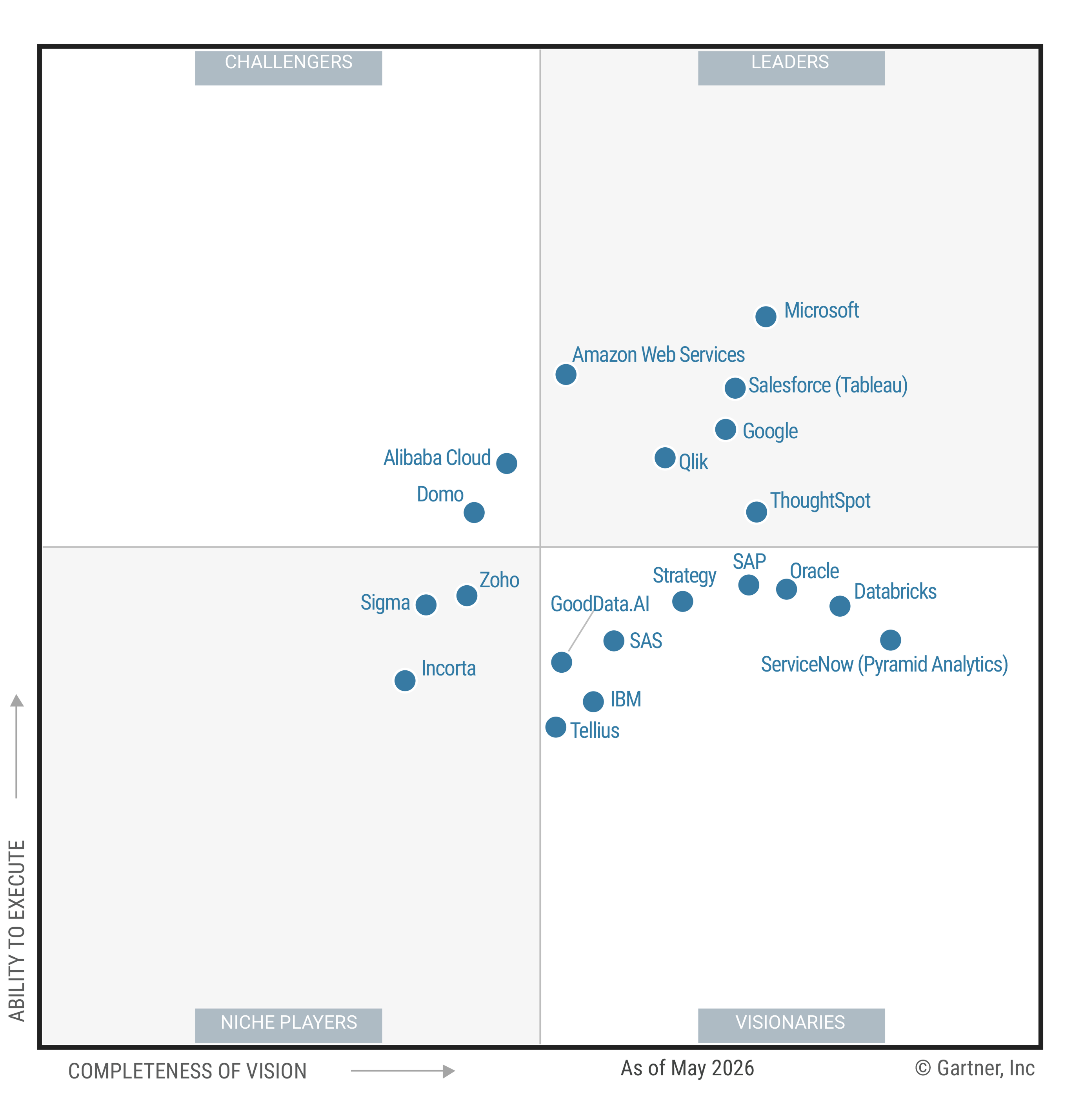
Building your foundation with ThoughtSpot
AI agents need context, not just raw data. When you give agents the right foundation, they make decisions based on accurate metrics and consistent business definitions. ThoughtSpot provides the semantic layer and analytical tools that transform raw data into actionable intelligence your agents can trust.
Spotter is a full-featured, built-in AI Analyst that serves as your agent's research assistant. It gathers evidence through natural language queries that pull exactly the data needed for each decision.
ThoughtSpot's Agentic Semantic Layer acts as the guardrails. It ensures agents interpret "high-value customer" or "conversion rate" the same way your team does—preventing the misinterpretations that lead to costly mistakes.
Once your workflows are running, Liveboards give you live visibility into decision quality metrics. You can track success rates, override frequency, and business impact in real time.
Start your free trial and start building the foundation your agentic workflows need for smarter, faster decision-making.
AI decision-making processes FAQs
1. How do you calculate ROI for automated decision-making systems?
Calculating ROI for automated decision-making systems requires measuring both tangible savings and strategic value. Start with your baseline: time spent on manual decisions, salary costs, opportunity costs, and error rates. On the cost side, include your full technology stack—cloud resources, platform licensing, integration development, maintenance, and monitoring staff time.
Track cost-per-decision by dividing total system costs by decisions made, but also measure business outcomes tied to your use case: revenue lift from dynamic pricing, fraud losses prevented, or inventory costs reduced. Compare these metrics against your pre-automation baseline over 6-12 months. In the long run, however, remember that the most successful implementations recognize that true ROI often emerges from capabilities you couldn't achieve manually at any cost.
2. What skills do you need to manage agentic workflows day-to-day?
You'll likely need "AI Process Owners" or "Decision Engineers" who can design Decision Graphs, monitor system performance, and refine decision logic based on team feedback. These roles combine domain knowledge with basic technical skills to bridge the gap between your strategic goals and automated execution.
3. How do you prevent vendor lock-in when building AI decision-making systems?
Choose platforms built on open standards with broad integration capabilities. Look for platforms that connect to multiple cloud data warehouses, support different large language models, and use common protocols for data exchange and agent communication.
4. What data retention policies apply to AI decision logs?
Decision logs are records that must follow your existing data retention and privacy policies, including GDPR or CCPA requirements where applicable. Store logs securely for your defined retention period and make sure any personally identifiable information is handled according to your compliance standards.