📌 Key takeaways
- 1. Generative AI turns a plain-language prompt into a query, a chart, a code snippet, or a written summary, so people get answers without writing SQL or Python by hand.
- 2. A wrong answer looks identical to a right one. Dropped rows or a bad join return a clean number with no error, so mistakes can reach decision-makers before anyone catches them.
- 3. Governed, deterministic output is what makes AI analysis checkable. When every answer traces back to one validated set of business definitions, the same question returns the same number every time.
- 4. ThoughtSpot pairs Spotter with an agentic semantic layer built on deterministic logic, giving business users plain-language speed and analysts an answer they can trace and trust.
Generative AI for data analytics can return a wrong analysis that looks exactly like a right one, decimals included, with no error message anywhere to flag it. That creates a trust problem for teams that depend on it for decisions.
Generative AI can now handle much of this analysis work, and analysts write less code by hand as a result. Manual coding used to catch mistakes automatically, because analysts noticed errors while writing the logic themselves. Reviewing a finished output does not offer that same visibility. Analysts must now search for mistakes that used to surface on their own, which is exactly where the trust problem starts.
The goal is to merge the convenience of generative AI with the reliability of a human analyst. Generative AI for data analytics spans a wide range, from a tool that writes a plotting function to an agent that runs a full query against live data. Solving the trust problem depends on where a team sits on that range and how much oversight the workflow builds in.
This piece looks at how teams are building that oversight into generative AI for data analytics today, where the risk still concentrates, and what to expect as adoption grows, including a round-up of real agentic AI use cases.
What Generative AI for Data Analytics Does for You
Generative AI for data analytics lets you ask a question in plain English and get an answer mapped to your own data, without writing SQL first. You type "revenue by region last quarter," and the tool reads your tables and columns and returns a result built from them.
The output falls into four types:
SQL query
Python snippet
Chart
Written summary
So a single question can hand you the query to reuse, the chart to share, or a plain-English readout to drop into a report, with no query editor in between.
Most real analysis is not one question, though. It is a chain of them, where each answer shapes what you ask next. When the query, the chart, and the notes live in separate tools, that thread breaks, and analysts lose track of what they were building and why. Keeping the prompts, outputs, and working history in one place is what holds the analysis together. A workspace like Analyst Studio is built for exactly that.
Start Getting Better Insights
How GenAI Analytics Differs From the BI You Already Run
Governed BI platforms use pre-approved definitions to ensure data metrics are consistent and reliable. That way, when you pull revenue on a dashboard, you will get a number your data team agreed on. That agreement is the reason two people opening the same dashboard see the same figure, and it is the reason you can take that figure into a board meeting without hedging.
Unlike governed BI platforms, standard GenAI analysis often generates answers on the fly without using pre-approved definitions. This can lead to inconsistency, where the same question yields different results at different times, making it difficult to trust the data without manual verification.
Consistent answers depend on governed data. When definitions are pre-approved and fixed, every analyst asking the same question draws from the same logic and can trace where the number came from. When they are not, the same prompt can return different figures on different days.
This is the gap worth watching as AI spreads through analytics. Many BI platforms now ship AI features that sit on top of whatever data model already exists, governed or not. The AI layer looks identical either way, so the difference only shows up in whether the answers hold.
Since governance is what separates a dependable answer from a lucky one, it is the thing to check before trusting any AI feature. The question is not whether a platform has generative AI, because most now do. It is whether that AI reads from a governed model underneath.
A few things tell you which you are dealing with. Ask whether metric definitions are defined once and reused, or regenerated with each prompt. Ask whether two people running the same question get the same figure. Ask whether you can trace an answer back to its source tables. When those hold, the AI is reporting on governed data. When they do not, it is improvising, and the output is only as stable as the last run.
Our ebook on the latest data and AI trends digs further into where governed analysis is heading.
How Are Data Teams Using Generative AI Today?
Data teams use generative AI at three levels right now: writing code, answering ad hoc questions, and running fuller analysis on top of the machine learning automation many already have in place.
Writing code: an analyst describes the query or transformation they want and reviews a first draft, cutting the time spent on boilerplate.
Ad hoc analysis: a business user asks a plain-English question and gets a chart back, without waiting on the data team.
Agentic workflows: an analyst hands off a fuller task and the agent selects tables, writes queries, and runs the analysis against live data. Some teams give the agent a notes file it reads at the start of each session, so it holds on to a project's data quirks and prior analyses from one run to the next.
These tools turn hours of manual work into minutes, but only when the results are traceable back to a governed model.
Data leaders are working through these same trade-offs in practice, and you can hear how they think about them on the Data & AI Chief podcast.
Why You Cannot Always Trust What GenAI Hands You
It is a documented industry-wide concern that AI can produce answers that sound completely convincing while being wrong. A Gartner survey of 360 IT leaders in mid-2025 found that only 23% were very confident in their organization's ability to manage security and governance when rolling out GenAI tools. That leaves more than three-quarters who are not, and they are the ones signing off on the numbers.
AI failures are often subtle, for example, there might be a minor data formatting error that causes a query to drop rows, resulting in an incorrect total that looks accurate. Since no error message appears, this wrong number can remain in reports for weeks before someone notices the mismatch.
This is more dangerous than manual coding because human analysts usually catch these small bugs while building the query. When AI writes the code, it hides the error inside a polished, confident-looking answer. To combat this, analysts must use validation techniques, such as sampling data, checking row counts, and verifying key figures against other sources.
Analysts have a few reliable ways to check AI output before trusting it. A manual first pass on a data sample catches obvious errors, assertions on expected row counts and value ranges flag anything out of bounds, and recalculating a key number a second way confirms it matches. Our guide to validating AI-generated insights walks through each one.
What You Should Look For in a GenAI Analytics Tool
The riskiest way to use an AI agent is to point it at an open dataset with no starting hypothesis and hope the answer holds up. The agent guesses at which tables matter, and you have no way to know whether it guessed right.
A governed tool closes that gap. Instead of guessing, the agent answers against known, validated tables, and every query ties back to definitions the business has already approved. This is what an agentic semantic layer does: it enforces those definitions at the moment a question is asked, so the same question returns the same answer whoever asks it. That is the property to look for. A tool either grounds its answers in governed definitions or it improvises, and only one of those is safe to build decisions on.
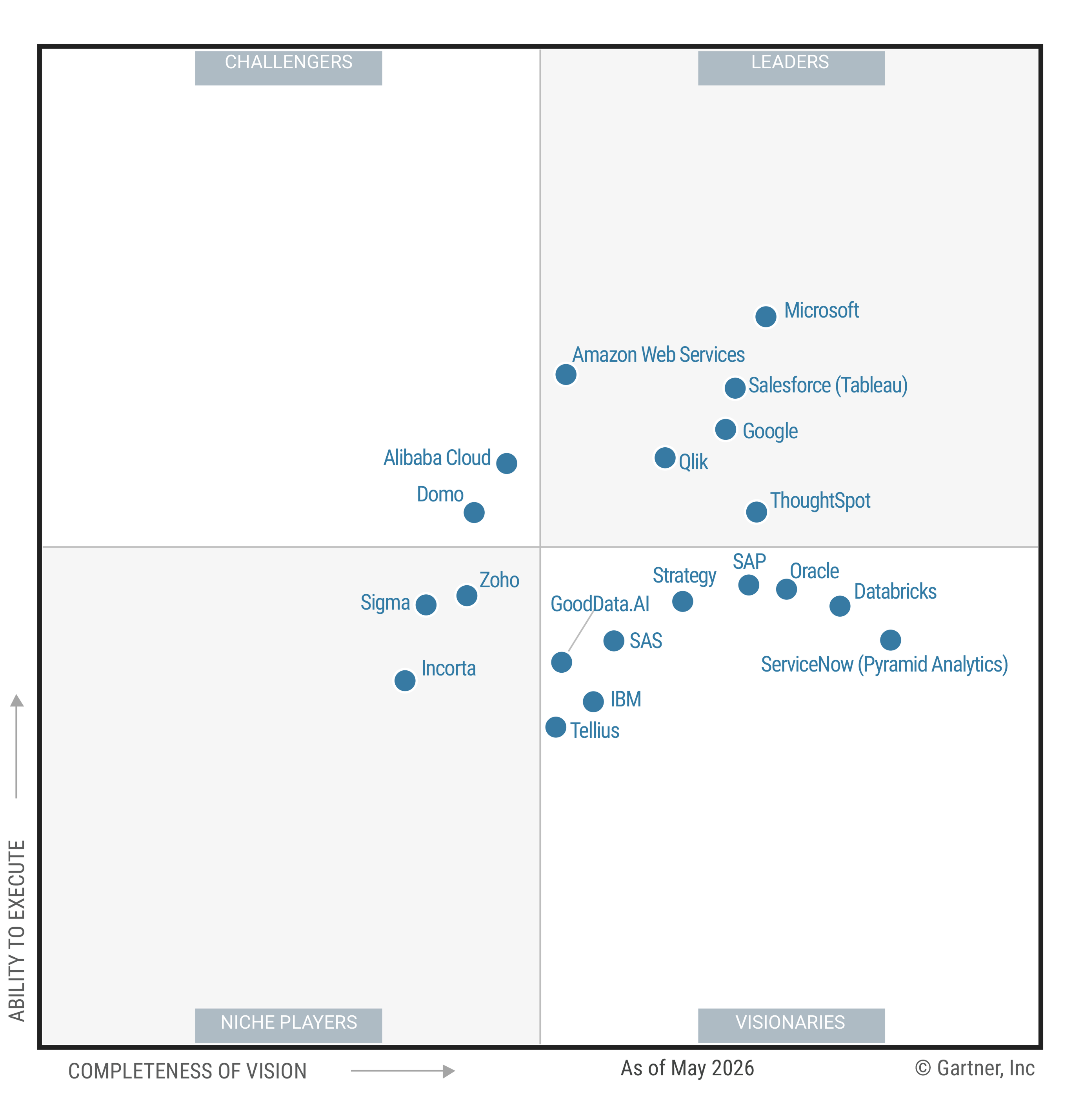
ThoughtSpot is built this way. It pairs Spotter, its AI Analyst, with that semantic layer, so a business user can ask a question in plain language and an analyst can trace the answer back to a definition they trust.
The result is that the analyst stops being the manual checkpoint. The safeguard they used to apply by hand comes built into the platform, which frees their time for the analysis that actually needs judgment.
See how deterministic, governed AI analytics works on your own data. Start a free trial