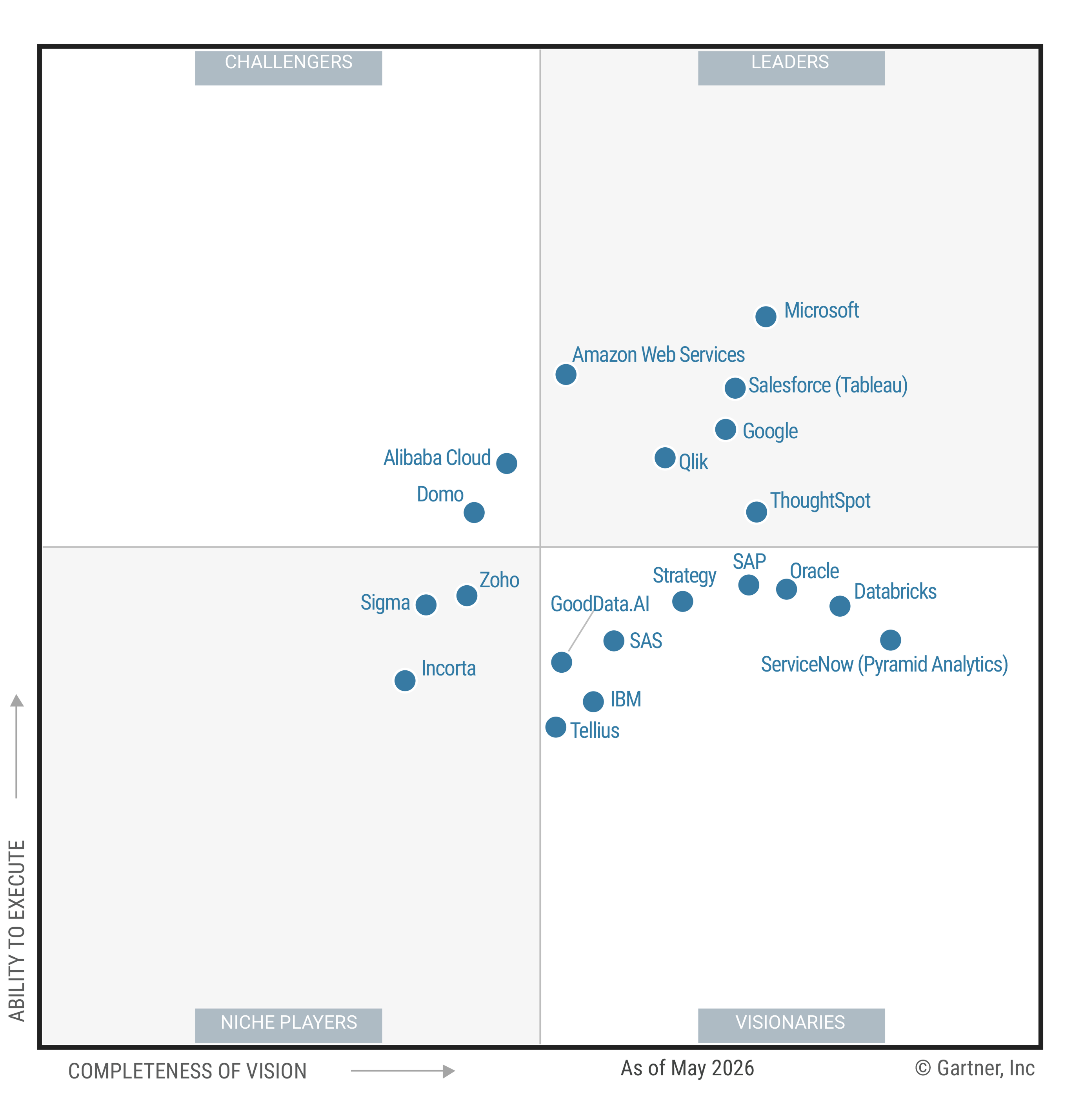
You're not evaluating Omni because something's broken. You're evaluating it because six months from now you need this decision to hold up, and a sales-led quote with no visible rate card makes that hard to plan around. That's usually what sends people looking at alternatives before they've even had a demo.
The reviews back that up. Omni draws consistently strong marks for its interface and time to insight, but G2's tagged review themes include "Missing Features," "Learning Curve," "Difficult Setup," and "Complex Data Modeling," with some advanced functionality staying hidden until someone stumbles onto it.
None of this makes Omni a bad platform. It makes it one option among several, and the right one depends on what's actually pulling you toward a search bar in the first place.
What's usually driving the search
Before comparing tools, it helps to separate the real reasons from the noise. The patterns that show up most often:
Pricing requires a sales conversation before you can even scope a budget. No public rate card means no fast gut check on total cost of ownership, and this isn't unique to Omni. Sigma, Looker, and most enterprise-tier BI platforms follow the same sales-led model.
The seat model gets expensive fast. Builder versus viewer distinctions, plus per-warehouse-connection costs, mean your final number depends heavily on how your team actually works, not just how many people log in.
Advanced features stay hidden until someone finds them. Multiple reviewers flag a real gap between "getting started" and "using the platform at full depth."
Complex models create instability. Dashboards built on more intricate underlying models report occasional rough edges, and documentation doesn't always keep pace with new releases.
You want AI that reasons past a single dataset. Omni's AI assistant, Blobby, runs on top of its semantic layer and has gained sub-agent architecture and Routines for scheduled analysis. But it still operates within the scope of the Topics and context your team has configured, and teams report that "something is better than nothing" when it comes to how much semantic context you need to build before it performs well.
With that in mind, here's where you and your team might land instead.
The comparison at a glance
| Platform | Pricing model | Standout strength | Where it asks you to compromise |
|---|---|---|---|
| ThoughtSpot | Published tiers plus enterprise | AI reasons across structured and unstructured data in one pane | Newer to spreadsheet-style ad hoc modeling than Sigma |
| Power BI | ~$10-14/user/month | Native Microsoft 365 and Azure integration | Locked into the Microsoft ecosystem |
| Tableau | ~$70/user/month | Deepest visualization and charting depth | Static dashboards, less built for conversational exploration |
| Looker | Custom quote, often $36K-$120K/year | Strong LookML governance on GCP | Steep learning curve, 3-6 month implementations reported |
| Sigma | Custom quote, median contract ~$61K/year | Spreadsheet-native UX directly on the warehouse | Warehouse compute costs pass through to you separately |
| Metabase | Free open-source tier, paid tiers scale up | Fast setup, low cost of entry | Lighter on enterprise governance and scale |
Pricing figures are directional estimates pulled from third-party procurement data and vendor pages; always confirm current numbers directly with each vendor.
Start Getting Better Insights
ThoughtSpot: for teams that want AI that investigates, not just retrieves
If the friction point pulling you away from Omni is the AI ceiling, meaning you want an assistant that reasons across your full data ecosystem instead of staying scoped to a single topic or dashboard, ThoughtSpot is built around solving exactly that. Spotter, its AI agent, performs multi-step reasoning and code generation across structured and unstructured data alike, connecting directly to CRM feeds, transaction logs, and call transcripts without requiring anyone to pre-clean or upload them first.
The semantic layer underneath works on the same philosophy that makes Omni's governance model appealing, every relationship gets defined upfront, so joins aren't optional or scattered. But it extends past structured warehouse data into your broader application ecosystem via native connectors and MCP support. Spotter's answers trace back to patented Search Tokens mapped to that governed layer, which matters if your team has ever had to explain to a board why two dashboards showed two different revenue numbers.
Best for: teams that want AI-augmented dashboards, automated anomaly detection, and embedded analytics on one platform, without needing a dedicated team to maintain the model as a side project.
Power BI: for teams already living in Microsoft
Power BI offers a more affordable option at $10 per user per month, and its starting price of roughly $14 per user per month across various listings makes it the cheapest enterprise-grade option on this list by a wide margin. Native integration with Excel, Teams, and Azure means if your org already runs on Microsoft, this is the path of least resistance.
The tradeoff is real, though: you're locking into that ecosystem, and the interface still leans more IT-led than business-user-friendly compared to newer, AI-native platforms.
Best for: finance and ops teams that need dashboards inside tools they already use daily, at the lowest per-seat cost on this list.
Tableau: for deep, IT-led visualization work
Tableau's licensing starts around $70 per user per month, roughly seven times Power BI's entry price, and that premium buys the deepest charting and visualization capability in the category. Analysts who want granular, pixel-level control over how a chart renders will find more room to work here than almost anywhere else.
What you don't get is a conversational relationship with your data. Tableau's strength is static, expertly-crafted dashboards, not live investigation.
Best for: analyst teams prioritizing visualization polish and depth over speed to insight.
Looker: for GCP-native governance
Looker fits engineering-led BI teams, and its LookML modeling gives data engineers a genuinely rigorous, governed semantic layer, particularly valuable if you're already deep in Google Cloud. Reviews estimate costs between $36,000 and $120,000 annually, with implementation timelines of 3-6 months, so this is a bigger organizational commitment than a quick BI swap.
The governance comes at a real cost in accessibility: business users often need an analyst as translator, and the learning curve is steep enough that it shapes the buying decision on its own.
Best for: data engineering teams that want strict, code-first governance and already run on Google Cloud.
Sigma: for spreadsheet-native business analysts
Sigma's pitch is direct: keep the spreadsheet interface everyone already knows, but connect it live to the warehouse instead of static exports. Sigma fits operator-led teams especially well, and reviewers note it's the most accessible interface for business users who think in cells and formulas rather than SQL.
Pricing runs on the same sales-led model as Omni. The median buyer pays $60,500 per year according to Vendr, though at $300 a month minimum, Sigma prices out teams under 10 users. Worth noting: Sigma's live-query architecture means warehouse compute costs pass to your cloud data warehouse bill rather than being bundled into the platform fee, so your actual total cost includes a variable you don't fully control.
Best for: analyst teams who want direct, live warehouse access in an interface they already know from Excel.
Metabase: for cost-sensitive teams that want to move fast
Metabase is the budget and open-source option on this list, and it's genuinely quick to stand up compared to any enterprise BI platform here. You'll trade some governance depth and enterprise scale for that speed and a materially lower price of entry, which is exactly the right trade for a startup that needs dashboards live this week, not next quarter.
Best for: startups and small teams that need working dashboards fast, without an enterprise sales cycle.
Match the tool to the problem, not the search term
None of this makes Omni Analytics a wrong choice. It means the fit depends on what's actually pulling you toward a search bar. If you're frustrated by an AI assistant that stays boxed into one topic, cost transparency you can't get without a sales call, or a semantic layer someone has to babysit full time, that's a signal worth acting on rather than working around.
The pattern across every alternative on this list is the same: match the platform to the friction point, not to whichever name comes up first in a search. A team drowning in Microsoft tools doesn't need the same fix as a team that wants AI reasoning across unstructured data. Get specific about what's actually broken before you sit through another demo.
Want to see how Spotter handles your own data instead of a demo dataset? Start a free trial.
FAQs
Why don't more BI platforms publish their pricing?
Most platforms in the mid-market-to-enterprise tier, including Omni, Sigma, and Looker, use sales-led pricing because costs scale with variables like builder versus viewer seat mix, connected data sources, and support tier. Power BI and Tableau are exceptions with public per-seat rates, which makes them easier to budget for quickly even if the total cost ends up higher at scale.
Is Omni's AI assistant, Blobby, actually limited compared to competitors?
Blobby has evolved significantly, gaining sub-agent architecture and scheduled Routines that run against the semantic layer. The real constraint isn't capability so much as scope: Blobby's reasoning is grounded in the Topics and context your team has configured, so the quality of its answers depends on how much semantic modeling work has already happened. Platforms like ThoughtSpot's Spotter extend that reasoning further by connecting directly to unstructured sources without requiring pre-modeling first.
How much should I budget for an enterprise BI platform in 2026?
It varies widely by seat model and vendor. Power BI starts near $10-14 per user monthly, Tableau around $70 per user monthly, while Sigma and Looker typically land in five-to-six-figure annual contracts depending on team size and feature tier. Get a specific quote before comparing, since published starting prices rarely reflect what enterprise deployments actually cost.
What should actually decide which alternative I pick?
Match the tool to the friction point that sent you looking. If it's the AI ceiling, prioritize platforms that reason across your full data ecosystem rather than staying scoped to one topic. If it's cost transparency, start with platforms that publish rates. If it's governance debt, make sure whatever you pick doesn't just relocate the semantic-model maintenance problem to a different team.