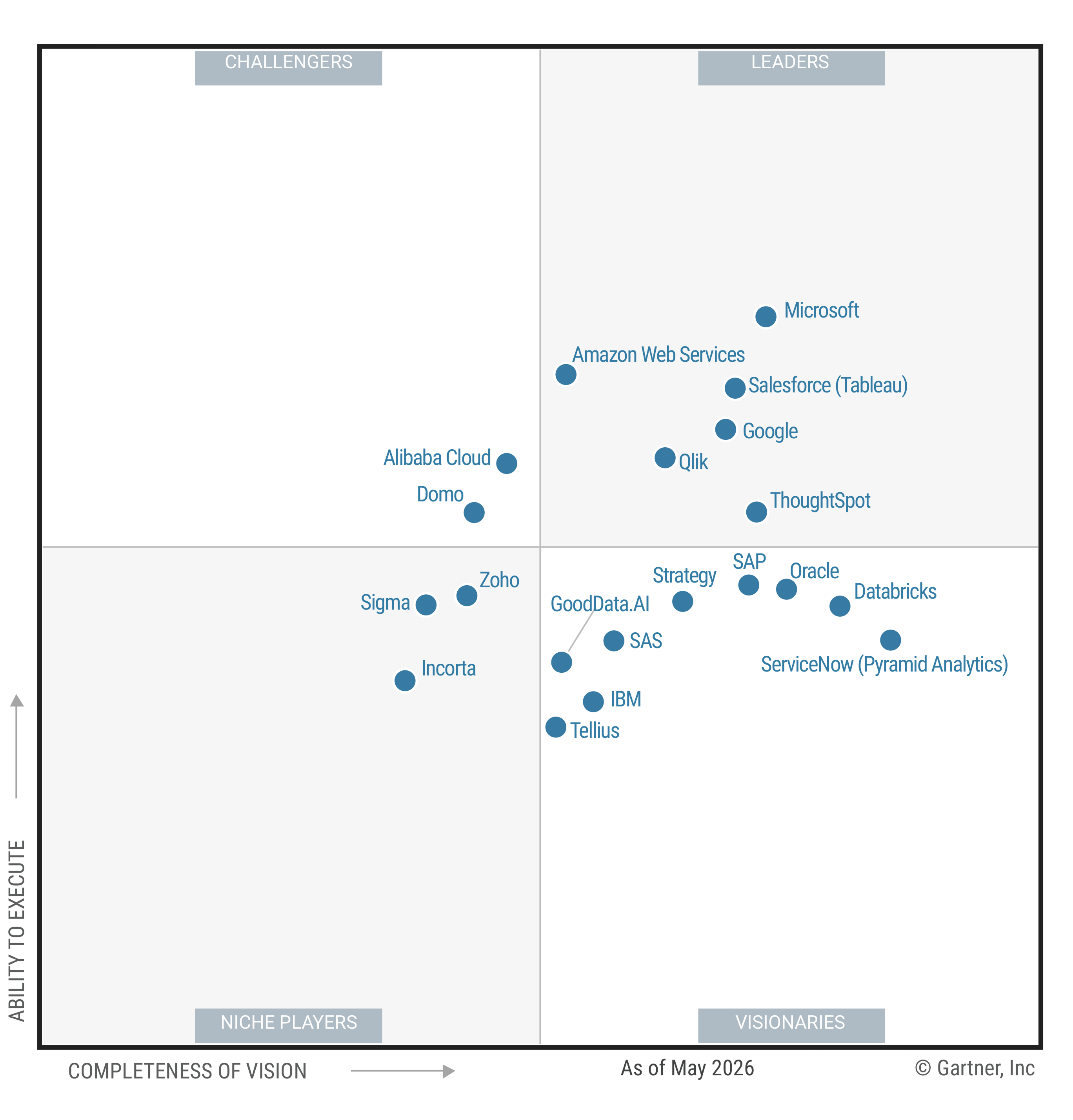
- Start with the decision, then work backward to the prediction, data, owner, and action.
- Treat data quality, governance, and validation as operating requirements.
- Match the platform to the prediction type, technical ownership, and decision workflow.
- Define measures for model quality, usage, response time, and business outcomes.
- Favor workflows that let people investigate a prediction before acting.
NIST's Research Data Framework describes predictive techniques as using historical data to estimate or forecast outcomes, not guarantee them. You can apply those estimates to questions about demand, account risk, or unusual changes.
Choosing the right fit requires more than a feature list. You need reliable data, understandable results, clear ownership, and a practical path from prediction to action.
What Predictive Analytics Solutions Do
For this guide, predictive analytics means using historical data to estimate or forecast an outcome, consistent with NIST's description of predictive techniques. Treat the result as decision input rather than a guarantee.
This guide uses a practical progression to organize the work. Descriptive questions cover what happened, diagnostic questions explore why, predictive questions estimate what may happen, and prescriptive questions consider a response.
Start with a decision, such as prioritizing sales accounts, setting inventory, adjusting staffing, or monitoring a KPI. This focus helps you judge whether a prediction can change an action.
Through SpotIQ, ThoughtSpot supports automated insight analysis, including anomaly detection, change analysis, leading indicators, and forecasts based on past trends, business growth, and seasonality.
How a Prediction Moves From Data to Decision
A practical process starts by defining the decision and outcome. The team then prepares data, chooses a model, validates it, and delivers a score or forecast.
NIST's voluntary AI risk management practices call for testing before deployment and during operation, production monitoring, documented accountability, defined roles, validation, and documented generalizability limits.
Use that guidance to assign an owner, set action thresholds, document where results may not generalize, and plan responses to performance changes. Add a feedback loop for reviewing outcomes and deciding when the model needs attention.
Do not stop at placing a prediction in a dashboard or CSV. Define who will review the signal, what context they need, and which action the workflow should support.
How Predictive Models Work and What They Need
MIT's curriculum covers supervised machine learning models for regression and classification. For evaluation, ask which defined outcome the model uses and what estimate it produces.
MIT's curriculum also presents classification, regression, and time-series forecasting as predictive problem types and approaches. Use those labels as comparison prompts, then ask each platform to define its output and validation approach.
For this guide, keep exploratory grouping separate from a direct prediction. If you use groups for analysis or targeting, state that purpose instead of labeling the grouping step as a predictive result.
NIST's voluntary AI RMF Core calls for testing before deployment and during operation, production monitoring, and documentation of generalizability limits. Use those checks to assess data suitability, quality, context, and definitions for the intended use.
Define who reviews changes and how the team will respond if performance shifts. Use that plan to connect monitoring results to an accountable decision.
Match each proposed input to the decision you want to make. Remove any input you cannot connect to that decision.
Five Analytics Methods You May Encounter
This guide treats the first three methods as direct predictive approaches, based on MIT's coverage of classification, regression, and time-series forecasting. It labels the final two as adjacent methods for investigation or targeting, not as a validated universal taxonomy.
Classification: Ask which business problem will be classified, how the result will be validated, and where it will appear.
Regression: Ask which business problem will use regression, how the result will be validated, and who will review it.
Time-series forecasting: Ask which metric and planning period the forecast will cover, how it will be validated, and who will act.
Anomaly detection: Use this label here for reviewing unexpected changes and deciding what needs further investigation.
Segmentation: Use this label here for organizing records for analysis or targeting before applying a direct predictive approach.
These five labels provide a working guide for evaluation rather than a market ranking. Keep the method name, output, and intended decision clear when comparing platform support.
SpotIQ can forecast metric trends using past trends, business growth, and seasonality. Consider that capability when your planning question concerns what a KPI may do next.
Where Predictive Analytics Creates Business Value
To evaluate business value, start with the decision you want to change. Connect each proposed signal to an owner, an action, and a measurable result.
For sales and marketing, consider account prioritization, pipeline forecasts, or channel-spending analysis. Austin Capital Bank reported 15% better retention, a 50% reduction in paid-search spend, and roughly 30% improved revenue margin in its paid-search optimization results.
For customer retention, ask whether an account-level score would help prioritize review. Decide which business context a reviewer needs before planning outreach.
For finance and risk, evaluate cash-flow forecasts, default estimates, or unusual-transaction reviews against the decision and its consequences. Define the review process before placing a signal into a consequential workflow.
For operations, supply chain, workforce, or service planning, identify the metric and planning period first. Then decide whether a forecast would change demand, capacity, staffing, or service decisions.
This guide distinguishes entity-level scores from metric-level forecasts by the decision they support. Use one label for an account or customer estimate and the other for a metric estimated across time.
How Predictive Analytics Platforms Differ
To structure your comparison, this guide uses four buying approaches: BI and analytics platforms, code-first machine learning infrastructure, AutoML platforms, and purpose-built predictive platforms. These labels are evaluation aids, not a complete market taxonomy or vendor ranking.
For each approach, ask how it handles your prediction type, technical ownership, governance needs, and delivery destination. Also ask which team will prepare data, review results, monitor performance, and maintain the workflow.
ThoughtSpot Analyst Studio supports complete analytics workflows across data preparation, analysis, and business-facing exploration. Evaluate that workflow against your specific prediction, ownership model, and review process.
Match the Platform to Your Decision Workflow
| Platform Approach | Best Fit | Common Trade-Off | Questions to Ask |
|---|---|---|---|
| BI and analytics platform | Teams evaluating forecasts near business metrics | Ask whether custom-model control is sufficient | Can users explore the drivers behind a forecast? |
| Code-first machine learning infrastructure | Teams evaluating custom modeling workflows | Ask how much engineering effort is sustainable | Who will build, deploy, monitor, and maintain the model? |
| AutoML platform | Teams evaluating guided model development | Ask where expert review remains necessary | How are validation, explainability, and drift handled? |
| Purpose-built predictive platform | Teams evaluating a defined scoring workflow | Ask how far the use case may expand | Can the platform adapt to your data and decision rules? |
For a forecasting use case, ask whether users can review the estimate beside the business metric and investigate its context. For entity-level scoring, ask how scores will be delivered, monitored, reviewed, and connected to an action.
Map every handoff between the initial question, prediction, investigation, and response. Assign an owner to each handoff so you can identify delays, unclear responsibilities, or missing review steps.
Use a conversational analytics experience as one evaluation point. Ask whether follow-up questions stay within governed context and consistent definitions.
What to Evaluate Before You Buy
Begin with the business outcome and the action that should change. Document the decision, owner, and response before you compare modeling features.
Then assess the available data. In its review of financial-services AI use, the US Government Accountability Office reports that incomplete, erroneous, unsuitable, outdated, or poorly labeled data can negatively affect AI function and outputs, a concern covered in its discussion of data quality and model risk.
Review whether the modeling approach fits the outcome and decision horizon. Ask how the platform validates results, explains important factors, handles changing conditions, and communicates uncertainty.
For voluntary risk-management guidance, NIST's AI RMF Core emphasizes documented accountability, defined roles, validation, monitoring, and documented generalizability limits. Your governance process should scale with the sensitivity and consequence of the decision.
Document where the prediction will appear, how users can investigate it, what action may follow, and whether the outcome returns as feedback. Ask each intended user what context and controls they need for their part of the workflow.
Estimate total operating effort across data preparation, integration, validation, governance, training, monitoring, support, and updates. Compare those responsibilities alongside license costs.
Before a pilot begins, choose measures for predictive quality, workflow usage, time to action, and the intended business result. Define how each measure will be collected and who will review it.
Questions to Ask During a Pilot
Use these five questions to keep a pilot tied to business value:
What decision will change if the prediction is useful?
Who owns the action, and what response will that person take?
What data is available, relevant, current, and governed?
How will the team validate, monitor, and revisit the result?
Where will the prediction appear in the daily workflow?
Write down the baseline and target for each pilot measure before testing starts. Decide whether you will track model quality or forecast error, workflow usage, response time, and the selected business outcome.
If usage is a pilot measure, define which actions count and over what period. Matillion reported 60% company-wide adoption, 80% fewer report requests, and more than £75,000 in annual savings in its self-service analytics results.
Look beyond the demonstration itself. Ask whether your team can repeat the process with governed data, clear ownership, sustainable operating effort, and documented follow-through.
Make Predictive Analytics Useful, Not Just Accurate
Choose predictive analytics solutions based on whether they connect a governed signal to a defined decision. NIST's voluntary AI RMF Core emphasizes context, testing, monitoring, documented limitations, and accountable risk management.
ThoughtSpot AI Analyst offers an intuitive, conversational experience for asking questions and receiving reliable answers. Use your evaluation criteria to decide whether that approach fits your decision process. To see how ThoughtSpot can support governed analytics workflows, request a ThoughtSpot demo.