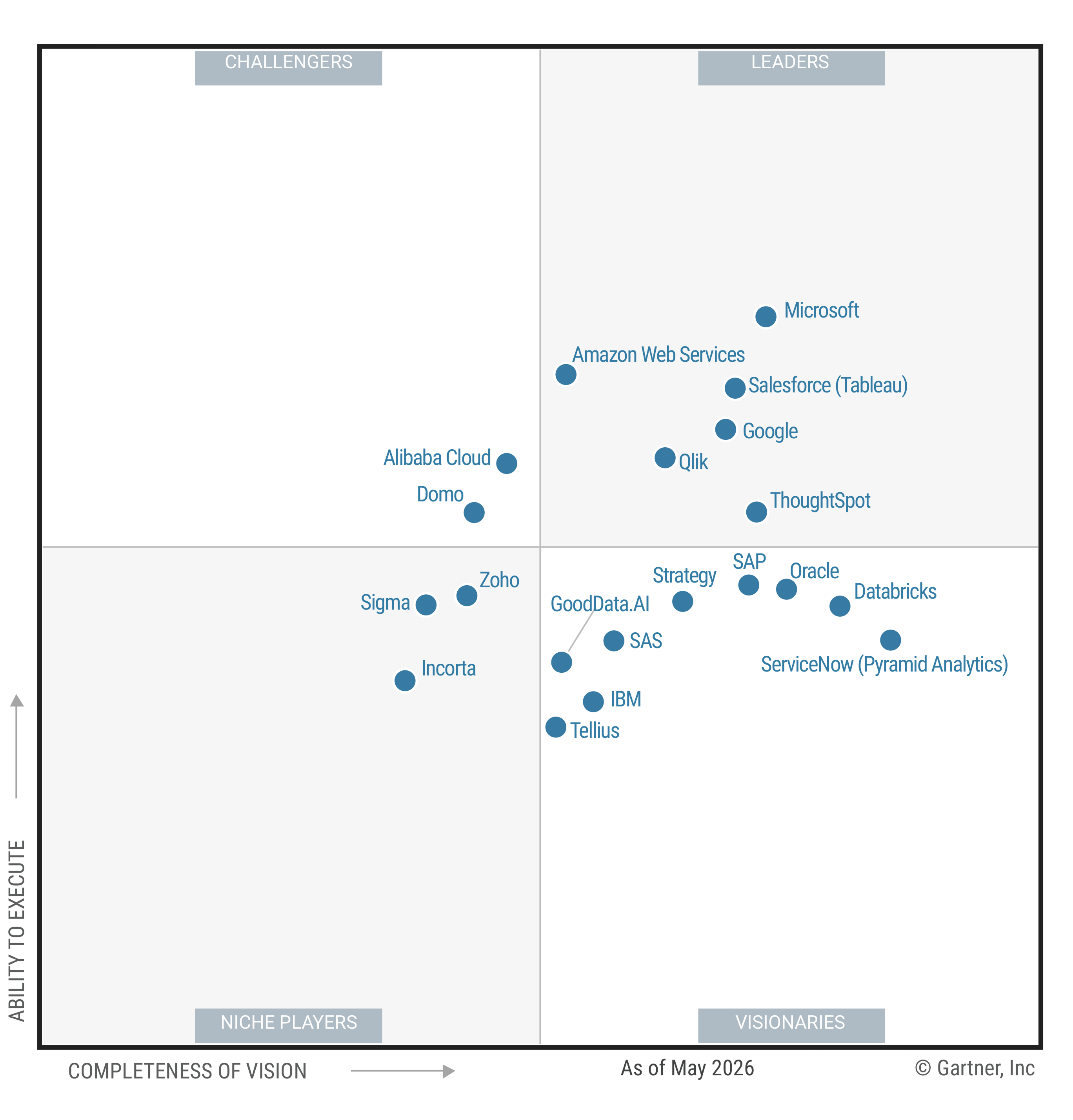
- No code AI tools can help you build apps, automate repeatable work, draft content, analyze data, and configure task-specific agents without writing code.
- Start with the job you need done, then assess the real data path, integrations, governance controls, cost, and long-term ownership.
- A quick prototype proves that an idea can work. A dependable business workflow also needs permissions, testing, review, and a clear owner.
- If your use case depends on business data, look beyond a friendly interface. You need shared definitions, traceable answers, and ways to correct results.
- Choose low-code when your product or workflow needs custom logic, specialized interfaces, unique integrations, or developer-managed embedding.
You need a faster way to put AI to work, but the category labels do not make the choice easy. App builders, automation platforms, agents, writing assistants, and analytics platforms can all appear under the same no code AI tools search.
So, how do you narrow the field without buying a polished demo that falls apart on real work? Match the category to a specific job, test it with the data and systems that matter, and decide who will own the workflow after launch.
What Are No Code AI Tools?
No code AI tools let you configure or create AI-supported workflows through visual builders, templates, forms, and natural-language prompts. You can often assemble a first version without writing software code, which opens practical experimentation to people closer to the business problem.
The label covers several types of platforms:
App builders help you create internal apps, portals, forms, and simple customer experiences.
Workflow automation platforms connect triggers, actions, approvals, and business systems.
AI agent platforms carry out multistep tasks within defined instructions and access boundaries.
Content and support platforms help you draft, classify, summarize, or respond within a controlled process.
Data and analytics platforms help you ask questions of business data and create interactive views.
How does no-code differ from low-code? No-code is designed for configuration without programming, while low-code leaves room for developers to customize logic, integrations, interfaces, or deployment patterns.
Which approach fits better? Your answer depends on how much customization you need, who will maintain the work, and what happens when the workflow meets an exception.
Who owns a no-code setup once it touches business operations? Name the person who will define permissions, test outputs, approve changes, and decide how errors get corrected.
For generative AI use cases, NIST’s Generative AI profile is a cross-sectoral companion resource to AI RMF 1.0. NIST says the voluntary RMF is intended to help organizations incorporate trustworthiness considerations into AI system design, development, use, and evaluation.
Treat that guidance as a resource for asking better risk questions, not as a certification or legal requirement. It does not guarantee that a platform is secure, compliant, accurate, or appropriate for your use case.
Match the Tool Category to the Job You Need Done
A category name can point you in the right direction, but it cannot define your use case. Before you compare platforms, write down the result you need, the people involved, the data required, and the point where human judgment belongs.
| Category | Best Fit for the Job | Typical User | Key Question Before You Buy |
|---|---|---|---|
| App builders | Internal apps, intake forms, portals, and lightweight customer experiences | Operations and business teams | Can you manage permissions, changes, and exceptions as usage grows? |
| Workflow automation | Repeatable trigger-action work across business systems | Operations and process owners | What happens when a source system fails or a record needs review? |
| AI agents | Multistep research, routing, analysis, or task execution | Business, operations, and product teams | Which actions can the agent take, and where does a person approve the work? |
| Content and support | Controlled drafting, summarization, classification, and response work | Marketing, service, and support teams | Can you ground responses in approved sources and review sensitive output? |
| Data and analytics | Questions about KPIs, customers, products, and operations | Business and data leaders | Can the platform use governed definitions and show how it reached an answer? |
Consider a weekly revenue-risk briefing. A content platform may draft the narrative, an automation platform may schedule delivery, and an analytics platform may answer which accounts changed and why.
Which category solves the core problem? If the hard part is getting a trusted answer from current business data, start with analytics. Do not add data access to a broad automation platform later.
Adoption data also shows why you should separate personal experimentation from firm deployment. The Federal Reserve’s AI adoption analysis reported that about 18% of US firms had adopted AI at the end of 2025. Source context matters here: the Census question broadened in November 2025 to cover AI used in any business function.
What did a separate individual survey show? The same Federal Reserve analysis reported self-reported, work-related GenAI use by about 41% of the workforce in November 2025. These measures are not directly comparable: one tracks firm-level AI adoption, while the other tracks workforce-level use reported by individuals.
The gap between trying AI and running it as a dependable business process is where your evaluation matters most. Ask whether the platform fits a defined job, not whether it can produce an impressive first result.
Choose No Code AI Tools with Your Data in Mind
A no-code interface can make setup feel simple, yet business data brings the real test. When a platform answers questions about revenue, churn, inventory, or service levels, the result depends on much more than the prompt.
Start with the data path. Can the platform connect to the sources you use, respect existing access rules, and work with definitions your business already trusts?
Then examine context and traceability. A question such as “Why did margin fall last week?” depends on the accepted margin formula and business units. It also depends on time boundaries, currency treatment, and access rights.
If those definitions are missing, a clear answer can still be wrong. You should be able to inspect the basis for an answer, ask a follow-up question, and correct the result when the business context changes.
What changes with an analytics-specific platform? ThoughtSpot is the Agentic Analytics Platform, built to help you ask questions of business data through natural language and work with governed analytics experiences.
For an analytics use case, explore how an AI analyst for business data supports questions and follow-ups. Business leaders can also review natural-language data exploration for a closer look at how the experience fits day-to-day decisions.
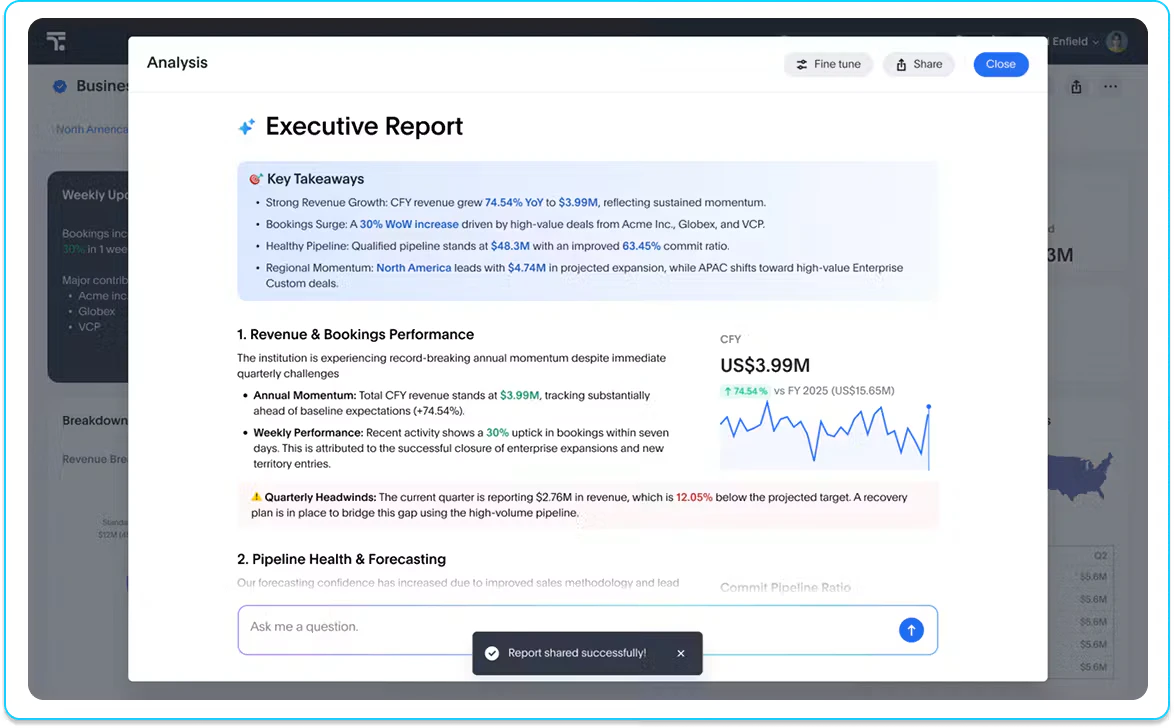
Before you buy, test a question that people already struggle to answer. Use real definitions, realistic permissions, and a known result so you can judge accuracy, clarity, and correction paths.
Use a Practical Evaluation Checklist Before You Buy
A strong evaluation recreates the conditions your workflow will face after the demo. Use a bounded business scenario, involve the people who own the data, and document what a passing result looks like.
Work through this checklist:
Define the decision or workflow. State the user, trigger, expected output, time requirement, and business action.
Test the real data path. Connect representative sources and confirm that permissions follow the right users and roles.
Name the human reviewer. Decide who checks sensitive outputs, handles exceptions, and approves material changes.
Check integrations. Verify how the platform reads from and writes to the systems your process depends on.
Inspect governance controls. Review access management, auditability, source traceability, output correction, and change ownership.
Calculate full cost. Include platform fees, usage charges, integration work, review time, training, and ongoing administration.
Plan the handoff. Agree on when IT, security, legal, procurement, or data teams join the process and who owns production support.
How can you use NIST without treating it as a buying standard? NIST’s voluntary AI RMF Core groups risk-management work into four AI risk management functions: govern, map, measure, and manage.
Applied to platform evaluation, those functions prompt practical questions. Who governs the workflow, what context and risks have you mapped, how will you measure performance, and how will you manage issues over time?
NIST’s voluntary AI RMF is not a checklist or fixed sequence; organizations apply its functions and suggested actions in ways that fit their context.
Now return to the weekly revenue-risk briefing. Test whether the platform identifies changed accounts and explains the sources and definitions used. Can an accountable reviewer correct the output?
If the briefing needs recurring delivery, examine automated insight workflows in the context of that exact process. The goal is a briefing people can review and act on, not another summary with unclear origins.
Where Low-Code Still Matters
No-code works well when the workflow is bounded, the interface can follow standard patterns, and configuration covers the required integrations. When your needs move beyond those boundaries, low-code can give your product and data teams the control they need.
Choose a low-code approach when you need:
A highly customized interface that matches your product experience.
Complex business logic with many exceptions or approval paths.
Strict performance requirements for high-volume or customer-facing use.
A unique integration that is not available through standard connectors.
Developer-managed testing, deployment, versioning, or embedding.
Think of no-code and low-code as points on a continuum. A business owner may configure the initial workflow, while developers extend the parts that need deeper control.
What if analytics will be customer-facing? Product teams often need governed data experiences inside their own app. ThoughtSpot Embedded offers low-code tools for that use case, and you can review embedded analytics for product teams when planning the experience.
Keep ownership in view as customization grows. If developers will maintain the integration, include them early enough to assess architecture, permissions, testing, and support expectations.
Make No Code AI Useful Beyond the First Demo
The best no code AI tools fit the work, data, controls, and owners behind the interface. When those pieces line up, you can move from a promising test to a workflow people can use with confidence.
For business questions grounded in governed data, consider how interactive analytics experiences can support follow-up analysis. Ready to see how the Agentic Analytics Platform fits your data and workflows? explore ThoughtSpot.