The race for efficiency is on, and AI is leading the charge. Organizations that successfully integrate AI into their workflows are cutting costs, improving productivity, and making smarter decisions faster. But with an overwhelming number of tools on the market, finding the right one is half the battle.
Generative AI, in particular, has gone from an experimental technology to an everyday business essential. According to McKinsey, AI-driven automation could drive labor productivity growth of 0.1 to 0.6% annually through 2040. This makes it a key driver of long-term business efficiency. The challenge isn't whether to use AI—it's choosing the right AI tools for business automation for your specific needs.
What are AI tools for business automation?
AI tools for business automation are software applications that use artificial intelligence to streamline workflows and eliminate manual tasks. These tools leverage technologies like machine learning, natural language processing, and large language models to analyze data, surface insights, and trigger actions across your technology stack.
How business AI tools work in practice
The top AI tools for business operate through three key mechanisms:
Connect to business applications: Integrate with CRM systems, email platforms, project management tools, and data warehouses
Use AI to analyze and predict: Use artificial intelligence to analyze data patterns, generate content, and make intelligent predictions
Automate manual processes: Replace effort-intensive human tasks with automated alerts, routing decisions, follow-ups, and reporting
Automation opportunities across your business
Modern AI for business leaders spans every functional area of your organization, creating efficiency gains across departments.
Revenue & marketing
Revenue and marketing teams use AI to spot valuable opportunities and personalize customer interactions at scale. These tools track buyer behavior, time outreach automatically, and optimize campaigns in real-time, so your team can focus on strategy and relationships instead of repetitive work.
Smart lead scoring and routing: AI analyzes customer behavior to spot buying signals and sends prospects to the right sales rep at the right time
Adaptive campaign management: Systems that automatically adjust your messaging, channels, and timing based on how prospects respond and engage
Content optimization: AI tools that create, test, and improve SEO content, then update it automatically based on how it ranks in search
Automated ad management: Platforms that continuously optimize your ad budget, creative assets, and audience targeting without manual work
Customer support & experience
Customer support teams use AI to resolve issues faster and cut costs. These tools handle customer questions, route tricky cases to the right people, and spot problems before customers even complain.
Autonomous support agents: AI that handles customer problems from start to finish—troubleshooting, refunds, the works
Intelligent ticket routing: Systems that send support tickets to the right specialist based on urgency and who's available
Proactive issue detection: AI that spots frustrated customers and reaches out before they file complaints
Contextual knowledge delivery: Tools that pull up relevant help docs and past conversations automatically during support chats
Operations & back office
Operations and back-office teams use AI to cut out repetitive tasks and speed up decisions. These tools process documents, route approvals, and handle routine requests on their own—turning manual work into strategic operations that run with less human effort.
Intelligent document processing: AI that pulls data from invoices, contracts, and forms, then flags anything unusual for review
Autonomous approval routing: Systems that check requests against policies and send them to the right people based on who's available
Adaptive finance automation: Tools that manage expenses, reconcile invoices, and track budgets while spotting ways to save money
Self-service HR orchestration: AI that handles employee questions, runs onboarding, and customizes benefits based on each person's situation
Analytics & decision-making
Analytics teams use AI to turn data into insights without the manual work. These tools monitor performance, spot the make-or-break trends, and answer business questions fast, so leaders can make confident decisions with real-time data.
Autonomous insight generation: AI that tracks your metrics, spots important changes, and explains what's driving them without you having to dig through reports
Conversational analytics: Ask questions in plain English and get instant answers with charts and recommendations—no SQL required
Predictive decision support: Tools that forecast what's coming, test different scenarios, and suggest the best move based on your data and business context
Intelligent anomaly detection: AI that watches thousands of metrics at once, flags weird patterns, and figures out why before small issues become big problems
Start Getting Better Insights
Top AI tools for business automation by category
|
Category |
Top Recommended Tools |
|
Business Analytics |
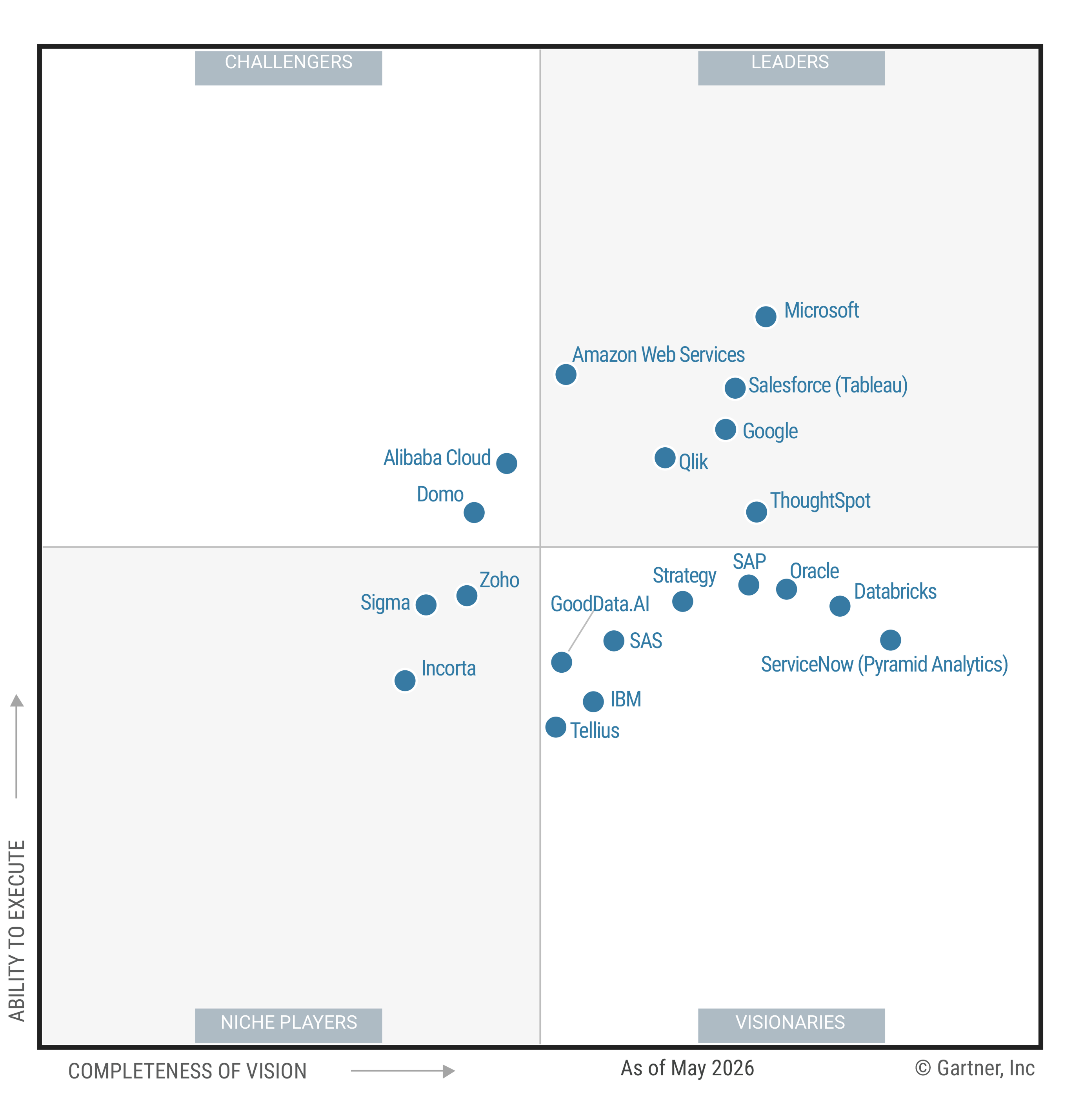
ThoughtSpot, Power BI, Tableau, Qlik |
|
Content Creation |
Jasper, Editpad, Writesonic, Frase |
|
Image & Video |
Midjourney, Venngage, Adobe Firefly, Descript, Envato |
|
Productivity |
ThoughtSpot, TheGist, Krisp, Motion, Fireflies.ai |
|
Project Management |
Asana, Motion AI, Trello, Basecamp |
AI analytics & decision automation tools
1. ThoughtSpot
ThoughtSpot delivers a complete business intelligence platform that automates data exploration and insight generation. With your dedicated team of Spotter AI analysts, you can ask questions in natural language and receive instant insights and visualizations. The platform automates report generation, dashboard maintenance, and anomaly detection, freeing your team from manual data work.
Core features of ThoughtSpot
Generative AI with Spotter: Built-in AI agents combine LLMs with ThoughtSpot's relational search to deliver instant insights and automate follow-up analysis
AI-powered dashboards: Interactive dashboards that update automatically and remove the need for manual report creation
Seamless analytics: Real-time connections to cloud platforms and business apps without data silos
AI-assisted data prep: ThoughtSpot Analyst Studio simplifies SQL, Python, and R workflows while automating data cleaning tasks
Best for
Organizations that need real-time, AI-powered analytics to make fast, data-driven decisions with automated insight generation.
Pros of ThoughtSpot
Natural language queries remove the need for complex report requests
Self-service analytics reduces dependency on data teams
Seamless cloud integration creates unified analytics workflows
Real-time data updates accelerate decision-making processes
Cons of ThoughtSpot
Advanced features like custom data modeling may require initial training
Frequent feature updates require ongoing learning
G2 rating: 4.4/5
2. Power BI
Microsoft's Power BI automates report generation and dashboard creation for organizations in the Microsoft ecosystem. The platform streamlines data visualization workflows and integrates seamlessly with Excel, Azure, and SQL Server to automate routine reporting tasks.
Core features of Power BI
Data visualization: Automated chart and graph creation with drag-and-drop functionality
Data preparation: Power Query automates data cleaning and organization workflows
Collaboration: Automated report sharing and commenting systems for team discussions
Integration: Seamless connections to Microsoft data sources for unified reporting
Best for
Organizations using Microsoft products that need automated BI reporting and traditional dashboard workflows.
Pros of Power BI
Seamless integration with Microsoft productivity tools
Automated visualization options reduce manual chart creation
Strong collaboration features for team-based analysis
Cons of Power BI
Limited customization options for complex visualizations
Performance issues with large datasets
Requires cloud services, which may conflict with data privacy requirements
G2 rating: 4.5/5
3. Tableau
Salesforce's Tableau automates data visualization and trend analysis for analysts who need advanced customization. The platform converts raw data into interactive insights through automated dashboard creation, though it requires manual query creation rather than natural language inputs.
Core features of Tableau
Data connectivity: Automated connections to databases, spreadsheets, and cloud services
Advanced analytics: Automated calculations, predictive modeling, and statistical analysis
Collaboration and sharing: Automated dashboard distribution and team collaboration workflows
Trend analysis: Automated pattern identification and predictive insights
Best for
Teams that need automated data visualization with deep customization options and interactive dashboards.
Pros of Tableau
Handles large datasets efficiently with automated processing
Strong community support and learning resources
Advanced visualization capabilities with automated layout options
Cons of Tableau
Limited parameter selection requires manual data updates
Complex datasets often require SQL knowledge
Performance can slow with very large datasets
G2 rating: 4.4/5
💡Read our Tableau pros and cons analysis for an in-depth look the strengths and shortcomings of this popular option.
4. Qlik
Qlik automates interactive data exploration through its associative data model, helping users discover data relationships without predefined queries. The platform supports both cloud and on-premises deployment with automated insight generation and machine learning integration.
Core features of Qlik
Interactive visualizations: Automated chart creation and real-time data exploration
Associative data model: Automated relationship discovery across data sources
Machine learning integration: Automated ML experiments and insight refinement
Data storytelling: Automated narrative generation with contextual visualizations
Best for
Organizations are looking for automated, interactive data exploration with AI-driven insight discovery.
Pros of Qlik
Cross-platform compatibility with automated mobile optimization
Custom application building without advanced coding requirements
Automated data relationship discovery
Cons of Qlik
Performance may slow with large datasets
Per-user costs can escalate for larger teams
Excel export formatting issues
G2 rating: 4.4/5
AI content & marketing automation software
1. Jasper
Jasper automates content creation workflows for marketers and organizations, generating high-quality blog posts, product descriptions, and ad copy at scale. The platform's AI-driven automation includes customizable templates, brand voice consistency, and SEO optimization integration.
Core features of Jasper
AI-driven content generation: Automated article creation, marketing copy, and product descriptions with minimal input
Templates & workflows: 50+ automated frameworks for blog posts, ad copy, and social media content
SEO optimization: Automated integration with SurferSEO for search-optimized content
Brand voice customization: Automated tone and style consistency across all content
Best for
AI-powered blog writing, automated ad copy generation, and SEO content workflows
Pros of Jasper
Rapid content automation for various marketing needs
User-friendly interface with pre-built automation templates
Strong SEO integrations for automated search optimization
Cons of Jasper
Requires human editing for factual accuracy and tone consistency
Higher pricing compared to some competitors
G2 rating: 4.7/5
2. Editpad
Editpad automates marketing content creation with AI-powered tools for generating messages, social media captions, ad titles, and email campaigns. The platform streamlines content workflows by allowing organizations to adjust tone, style, and length before generating automated content.
Core features of Editpad
Automated email creation: Generate personalized emails on any topic with automated customization
Social media automation: Create engaging captions and descriptions with automated audience targeting
Ad campaign automation: Generate concise, targeted ad titles based on automated prompt analysis
Best for
Automated marketing copy creation with personalization options
Pros of Editpad
Rapid automated content creation with high accuracy
Automated personalization options across multiple languages
No registration required for basic automation features
Cons of Editpad
Contains advertisements and security verification requirements
Not suitable for detailed content like automated blog creation
G2 rating: 4.4/5
3. Writesonic
Writesonic automates content creation for organizations, agencies, and freelancers through AI-driven blog posts, ad copy, and product descriptions. The platform automates multi-language content generation and provides SEO optimization workflows for global content teams.
Core features of Writesonic
Long-form AI writer: Automated generation of full-length blog posts, articles, and whitepapers
Ad & social media automation: Automated persuasive copy for Facebook, Google Ads, and LinkedIn
SEO & keyword automation: Automated keyword suggestions and content structure optimization
Multi-language automation: Automated writing in over 20 languages for diverse audiences
Best for
AI-powered automated long-form and short-form content across industries
Pros of Writesonic
Affordable AI writing automation with wide range of use cases
Automated multi-language content creation for international teams
Built-in SEO automation features
Cons of Writesonic
May require human editing to refine automated content output
Advanced automation features are limited to higher-tier plans
G2 rating: 4.7/5
4. Frase
Frase automates content research and SEO optimization for content marketers through AI-powered analysis of search intent and competitor content. The platform automates content brief creation, SERP analysis, and article structure recommendations.
Core features of Frase
AI-driven content briefs: Automated outline generation based on SERP analysis
SEO automation: Automated keyword recommendations and content improvement suggestions
Automated content writing: AI-generated article drafts and automated summaries
SERP analysis automation: Automated competitor content strategy identification
Best for
AI-driven automated SEO content research and article creation
Pros of Frase
Strong focus on SEO with automated content analysis workflows
Streamlined research and automated content planning
Ideal for marketers looking to automate organic traffic growth
Cons of Frase
More focused on research automation than creative writing
Requires learning curve to maximize automation features
G2 rating: 4.6/5
AI creative & media automation software
1. Midjourney
Midjourney automates digital art generation through AI-powered text-to-image creation. The platform operates through Discord and automates high-quality visual creation for artists, designers, and content creators who need rapid concept art and branding materials.
Core features of Midjourney
AI-generated digital art: Automated high-resolution image creation from text prompts
Style automation: Automated artistic style, lighting, and texture adjustments
Discord-based workflow: Collaborative automation through Discord integration
High-resolution automation: Automated production of detailed, professional-grade visuals
Best for
Automated high-quality AI-generated digital art and concept creation
Pros of Midjourney
Produces highly detailed visuals through automated processes
Creative control automation with style and aspect ratio customization
Fast automated image generation with multiple variations per prompt
Cons of Midjourney
Requires Discord account for automated workflows
Limited editing automation compared to traditional design software
G2 rating: 4.7/5
2. Venngage
Venngage automates professional design creation through AI-powered infographics, reports, and visual content generation. The platform automates layout adjustments, font selection, and color coordination while checking accessibility standards automatically.
Core features of Venngage
AI infographic automation: Automated data-driven infographic creation from text input
Smart Accessibility AI: Automated WCAG compliance checking and contrast optimization
AutoBrand AI: Automated brand consistency across all designs with logo and color application
Best for
Automated professional visual design for teams without advanced design skills
Pros of Venngage
Easy-to-use automated drag-and-drop design workflows
Automated smart layout generation for professional results
Wide range of automated templates across industries
Cons of Venngage
Free plan has limited automated export options
Some advanced automation features require paid subscriptions
G2 rating: 4.7/5
3. Adobe Firefly
Adobe Firefly automates design workflows through AI-powered image generation and editing within Creative Cloud applications. The platform includes automated tools for text-to-image creation, style application, and graphic editing for designers and marketers.
Core features of Adobe Firefly
Text-to-image automation: Automated image creation from text descriptions
Adobe integration automation: Seamless automated workflows with Photoshop, Illustrator, and InDesign
AI-powered text effects: Automated stylized typography and creative text design generation
Style automation: Automated image modification for brand consistency
Best for
AI-powered automated image editing and graphic design workflows
Pros of Adobe Firefly
Seamless automation integration with Adobe Creative Cloud
AI-driven automation for faster design workflows
High-quality automated professional-grade image generation
Cons of Adobe Firefly
Requires Adobe subscription for full automation access
Still developing certain advanced AI automation features
G2 rating: 4.5/5
4. Descript
Descript is an all-in-one video and audio editing platform that leverages AI to simplify content creation. It’s widely used for video editing, podcast production, and transcription. Unlike traditional editing tools, Descript allows you to edit videos by modifying the transcript, making it an excellent choice for content creators, marketers, and podcasters.
Core features of Descript
AI-powered transcription: Converts speech to text with high accuracy.
Text-based video editing: Edit video/audio by modifying the transcript.
AI voice cloning: Generates synthetic voiceovers for quick corrections.
Screen recording: Captures high-quality video and audio for tutorials.
Best for
Video editing, podcast production, and automatic transcriptions
Pros of Descript
Easy-to-use interface for text-based video editing
AI-powered transcription is fast and accurate
Ideal for podcast creators and social media videos
Cons of Descript
Limited advanced video editing features compared to traditional software
AI voice cloning may not sound completely natural in all cases
G2 rating: 4.6/5
5. Envato
Envato offers a powerful suite of AI-powered creative tools that allow your team to save time on everything from generating visuals to producing audio and video. ImageGen and ImageEdit empower users to create and edit images directly in-browser, while VoiceGen and MusicGen turn text into speech or music. VideoGen transforms prompts into animated videos, enabling fast prototyping for various creative projects.
Core features of Envato
Unlimited stock assets: Provides templates, videos, music, and graphics.
AI-powered search: Quickly finds relevant assets based on keywords.
Video and motion graphics templates: Ready-made elements for Adobe Premiere and After Effects.
Royalty-free music and sound effects: High-quality audio for any project.
Best for
AI powered tools, digital creative assets, templates, extensions and plug-ins
Pros of Envato
Affordable subscription for unlimited access to assets
Wide variety of templates for video, graphics, and web design
AI-powered search helps find the right assets quickly
Cons of Envato
Assets may require customization to fit brand aesthetics
Subscription-based pricing may not be ideal for occasional users
G2 rating: 4.6/5
Best AI tools for business productivity
1. ThoughtSpot
ThoughtSpot integrates agentic AI directly into your analytics workflow, s an Agentic AI platform that helps you streamline data exploration and make better business decisions. With self-service analytics, you can easily explore data and drill down into insights without needing technical expertise. ThoughtSpot integrates seamlessly with your existing data ecosystems, so you can get actionable insights faster and more accurately, empowering your team to make informed decisions.
Core features of ThoughtSpot
Self-service analytics: You can explore your data and get insights without relying on IT or data teams.
Drill-down capabilities: Quickly dive deeper into your data to understand the root causes behind trends or patterns.
AI-powered insights: ThoughtSpot’s AI Analyst, Spotter, delivers recommendations and highlights data patterns for smarter decisions.
Embedded analytics: Easily integrate data insights into the tools you already use, like Salesforce or ServiceNow.
Real-time collaboration: Share live data and collaborate with your team directly within the platform for faster decision-making.
Best for
Self-service analytics, easy data exploration, and supporting business decisions without needing advanced technical skills.
Pros of ThoughtSpot
Allows you to analyze data without needing deep technical knowledge
Speeds up decision-making by simplifying complex data workflows
Integrates into your existing tools and workflows
Intuitive search functionality that makes data exploration easy for everyone
Cons of ThoughtSpot
Advanced features, like custom data modeling, may take some training to fully leverage
Frequent updates introduce new features, which may require some adjustment
G2 rating: 4.4/ 5
2. TheGist
TheGist is an AI-powered tool that summarizes emails, Slack messages, and other workplace communications, helping users stay on top of conversations without information overload. It’s particularly useful for busy professionals who need quick insights from long email threads or Slack channels.
Core features of TheGist
AI-powered email summarization: Condenses lengthy email threads into key points.
Slack message recaps: Highlights the most important Slack conversations.
Smart notifications: Alerts users about relevant messages and tasks.
Multi-platform integration: Works with email clients and Slack.
Best for
AI-powered email and Slack message summarization
Pros of TheGist
Saves time by condensing long messages into actionable summaries
Helps professionals manage communication overload
Integrates seamlessly with Slack and email platforms
Cons of TheGist
Limited support for other collaboration tools outside Slack and email
AI summaries may occasionally miss context in complex discussions
G2 rating: 4.4/5
3. Krisp
Krisp is an AI-powered audio enhancement tool that removes background noise, echo, and voice overlap from online meetings in real time. Beyond its acclaimed noise cancellation technology, Krisp also functions as a powerful meeting transcription app, helping businesses capture every word of a conversation without distractions.
Core features
AI-based noise cancellation: Eliminates background noise for clear audio.
Echo and voice overlap removal: Reduces distractions during calls.
Real-time transcription: Captures conversations accurately.
Call summary generation: Provides concise meeting recaps.
Platform compatibility: Works across major communication channels like Zoom, Google Meet, and Microsoft Teams.
Best for
AI-driven scheduling and workflow automation
Pros of Krisp
Eliminates background noise for distraction-free calls
Reduces echo and voice overlap, ensuring clarity
Captures conversations accurately with real-time transcription
Cons of Krisp
Poor customer support
High subscription costs
G2 rating: 4.7/5
4. Motion
Motion is an AI-powered scheduling and productivity platform that automates task management, meeting scheduling, and workflow organization. It’s ideal for professionals and teams looking to optimize their daily schedules without manual planning.
Core features of Motion
AI-driven scheduling assistant: Automatically prioritizes tasks and meetings.
Smart calendar integration: Syncs with Google Calendar and Outlook.
Automated task planning: Allocates time for to-dos based on urgency.
Focus time management: Blocks distractions and provides deep work sessions.
Best for
AI-driven scheduling and workflow automation
Pros of Motion
Saves time by automating task prioritization
Reduces calendar conflicts with intelligent scheduling
Helps teams optimize focus time and reduce distractions
Cons of Motion
Limited flexibility for highly customized scheduling needs
Requires ongoing usage to fully adapt to individual workflows
G2 rating: 4.6/5
4. Fireflies.ai
Fireflies.ai is an AI-powered meeting assistant that transcribes conversations, summarizes discussions, and tracks action items. It helps teams improve meeting efficiency and assures key points aren’t lost.
Core features of Fireflies.ai
AI-powered transcription: Converts meetings into accurate text records.
Meeting summaries: Highlights key decisions, action items, and takeaways.
Automated action tracking: Assigns follow-ups based on meeting discussions.
Multi-platform integration: Works with Zoom, Google Meet, and Microsoft Teams.
Best for
AI-powered meeting transcriptions and action item tracking
Pros of Fireflies.ai
Saves time by automating meeting notes and summaries
Improves collaboration with searchable meeting transcripts
Integrates with popular video conferencing tools
Cons of Fireflies.ai
AI-generated transcriptions may require manual corrections
Some advanced features are limited to paid plans
G2 rating: 4.7/5
Best AI software for project management
1. Asana
Asana is a popular project management platform that helps teams plan, organize, and track work efficiently. With AI-powered task automation and smart workflow suggestions, Asana makes collaboration seamless by reducing manual work and keeping projects on schedule. Whether you're managing marketing campaigns, product development, or daily tasks, Asana’s AI tools help teams stay focused and productive.
Core features of Asana
AI-powered task automation: Automatically assigns tasks and suggests due dates.
Timeline and Gantt charts: Visualizes project progress and dependencies.
Smart deadline predictions: Uses AI to optimize scheduling and workload distribution.
Integration with 200+ tools: Connects with Slack, Google Drive, and more.
Best for
AI-powered task automation and team collaboration
Pros of Asana
Intuitive interface with flexible project views
Reduces manual work with AI-powered automations
Scales well for teams of all sizes
Cons of Asana
Can feel overwhelming for new users
Advanced AI features are limited to premium plans
G2 rating: 4.3/5
2. Motion AI
Motion AI is an intelligent project management and scheduling tool that helps teams prioritize tasks, automate workflow planning, and optimize meeting schedules. Its AI-driven features eliminate scheduling conflicts and improve productivity by automatically adjusting calendars based on priority and deadlines.
Core features of Motion AI
AI-powered scheduling assistant: Automates task and meeting prioritization.
Workflow optimization: Dynamically adjusts schedules to prevent conflicts.
Smart calendar integration: Syncs with Google Calendar and Outlook.
Task management dashboard: Provides a centralized view of deadlines and priorities.
Best for
AI-driven scheduling and workflow automation
Pros of Motion AI
Reduces manual scheduling efforts with AI automation
Helps teams maximize productivity by optimizing focus time
Easy to integrate with existing calendars
Cons of Motion AI
Not ideal for complex project management beyond scheduling
Requires regular usage to fully optimize workflow patterns
G2 rating: 4.6/5
3. Trello
Trello is a visual project management tool known for its intuitive Kanban-style boards. With AI-powered automation, it streamlines task management, making it easy to track projects, set deadlines, and automate repetitive workflows. It’s ideal for teams that need a simple yet effective way to organize work.
Core features of Trello
Kanban boards: Organizes tasks visually with drag-and-drop functionality.
AI-powered Butler automation: Automates repetitive tasks and reminders.
Customizable workflows: Adapts to different project management styles.
Integration with business apps: Connects with Slack, Google Drive, and Jira.
Best for
Visual project tracking with AI-powered automation
Pros of Trello
Simple and easy-to-use interface
AI-powered automation reduces manual work
Flexible for various project types and industries
Cons of Trello
Limited reporting and analytics compared to other tools
Best suited for smaller teams or simpler workflows
G2 rating: 4.4/5
4. Basecamp
Basecamp is a straightforward project management tool designed for teams looking for an all-in-one workspace. It combines to-do lists, message boards, document sharing, and scheduling into a single platform, making collaboration simple and effective.
Core features of Basecamp
All-in-one project management: Combines task tracking, messaging, and file sharing.
Campfire chat & message boards: Keeps team communication organized.
Client collaboration tools: Allows external stakeholders to participate in projects.
Hill Charts for project tracking: Visualizes progress beyond standard timelines.
Best for
Simple, all-in-one project collaboration for teams
Pros of Basecamp
Easy-to-use interface with minimal learning curve
Reduces reliance on multiple tools by consolidating collaboration features
Flat-rate pricing makes it cost-effective for larger teams
Cons of Basecamp
Lacks advanced AI-driven automation and analytics
Not as feature-rich for complex project tracking
G2 rating: 4.2/5
How to choose the right AI tools for business automation: A leader's checklist
Choosing the right AI automation tools starts with clarity on what you're trying to achieve. Before evaluating features or pricing, ask yourself what business outcomes matter most, whether that's cutting costs, speeding up processes, improving quality, or delivering better customer experiences.
Once you've defined success, work backward:
Map your integrations: Identify where your critical data lives and which apps your teams rely on daily
Check security and compliance: Verify the tool meets your industry's data residency, privacy, and regulatory requirements
Test for real-world usability: The best AI tool is the one your non-technical teams will actually adopt, so prioritize intuitive interfaces and strong change management support
AI for business leaders: adoption playbook
Successful AI adoption is all about starting focused, building confidence, and scaling what works. Here's how to move from pilot to production.
Pick one or two flagship automation use cases
Start with high-impact, repeatable workflows where automation delivers immediate value. Monthly reporting, sales follow-up sequences, and support ticket triage are proven entry points that show ROI quickly.
Define clear success metrics upfront, such as hours saved per week, response time reduction, or conversion rate improvement. Measurable wins build momentum and justify broader investment.
Create simple guardrails and policies
Establish the basics of data governance before scaling. Set data access rules, define which decisions require human review, and document vendor security requirements to protect your organization.
Your guardrails should enable your workflow, not slow it down. Focus on the critical controls like data privacy, compliance boundaries, and approval thresholds, then let teams move fast within those lanes.
Measure, communicate, and scale wins
Track the metrics that matter: hours saved, cycle time improvements, and impact on revenue or customer satisfaction. Share these wins across the organization to build buy-in and identify new automation opportunities.
Once you've proven value in one area, expand systematically. Roll out successful use cases to adjacent teams, refine your playbook based on feedback, and reinvest savings into the next wave of automation.
ThoughtSpot: Your AI automation layer
Most BI tools still trap insights behind static dashboards and manual report requests. ThoughtSpot flips that model, with AI-powered analytics that put real-time analytics directly in your team's hands. With the power of natural language search and automated insight generation, your team can ask questions, get answers, and let Spotter surface the patterns that matter without waiting on data teams.
Ready to see how AI-powered analytics accelerates decision-making across your organization? Start your free trial to experience ThoughtSpot in action.
Business efficiency tools FAQs
Can AI tools for business automation replace entire teams, or just specific tasks?
AI tools automate specific tasks and workflows, not entire teams. They handle repetitive work like data entry, report generation, and ticket routing, freeing your team to focus on strategy, creativity, and complex decision-making that requires human judgment.
What kinds of work should not be automated with AI tools?
Avoid automating work that requires empathy, ethical judgment, or strategic creativity—like sensitive customer escalations, executive decisions, or brand positioning. AI can support these processes, but it shouldn't replace the human insight that drives them.
How can small businesses start with AI automation on a limited budget?
Start with free trials and freemium tools that address your biggest pain points, like automated email responses or basic analytics. Prove ROI on one workflow, then reinvest savings into expanding automation across other areas.
How do I keep AI tools for business automation compliant with data privacy laws?
Choose vendors that meet your industry's compliance standards (GDPR, HIPAA, SOC 2), establish clear data access policies, and audit AI workflows regularly to ensure they handle sensitive information according to regulatory requirements.