- AI orchestration coordinates agents, models, business data, tools, rules, and people around a defined job.
- Start with the job and its risks, then choose the components that fit each step.
- Governed context, clear tool contracts, permission boundaries, logs, and approval gates support trustworthy actions.
- Evaluate an AI orchestration platform by workflow fit and operating demands, not a generic ranking.
Connecting more agents and models can create additional context, permission, and ownership questions to test. If you cannot trace an action or explain the business meaning behind it, adding another component will not fix the workflow.
For this article, AI orchestration means coordinating models, agents, business data, tools, rules, and human decisions across a workflow. That working definition gives you a practical way to examine architecture, governance, use cases, and platform fit without treating one definition as universal.
What AI Orchestration Coordinates
An AI workflow may need to interpret a request, retrieve data, choose a model, call a business system, and request approval. AI orchestration coordinates those steps so each participant receives the right task, context, and level of access.
The orchestrator is the component or service that manages that coordination. Depending on the design, it may route tasks, pass context, invoke tools, track state, handle exceptions, and record activity.
An orchestrator does not need to perform every task itself. Instead, it decides what happens next, which resource should respond, and what conditions must be met before the workflow proceeds.
This distinction matters when you evaluate orchestrated AI. A workflow design should test whether a capable model receives the right context, uses an appropriate tool, and remains within its intended permission boundary.
Likewise, a well-designed orchestration layer can combine deterministic steps with model-driven steps. A rule may select an approved data source, while a model summarizes the resulting records for review.
AI Orchestration Architecture and Components
Consider a workflow that investigates a revenue variance before a monthly finance review. The request starts with a question, but the answer may require several coordinated components:
Task intake: Captures the request, user identity, scope, and expected output.
Planner or router: Breaks the job into steps and assigns each step.
Agents and models: Analyze information, generate text, classify records, or propose actions.
Business data: Supplies the approved records, metrics, definitions, and source details.
Context: Carries relevant instructions, history, business rules, and prior decisions.
Tool contracts: Define inputs, outputs, permissions, failure behavior, and action limits.
Identity and permissions: Control which data and actions each participant can access.
Memory or state: Tracks completed steps, intermediate results, and unresolved questions.
Monitoring: Records activity, latency, errors, and evaluation results.
Human approval: Places a person before consequential or hard-to-reverse actions.
In the finance example, the router might send metric retrieval to an approved analytics service. A model could then draft an explanation, but a finance owner reviews it before distribution.
For this guide, a clear tool contract can document what the tool can read, which actions it can take, expected inputs and outputs, and how failure is reported.
Without that detail, the orchestration layer has to guess. When a connector can both read and change a record, define those permissions and failure paths explicitly.
How Orchestration Differs From Agents, RPA, and MLOps
AI orchestration overlaps with several established approaches, but each one coordinates a different part of the work. The comparison below can help you identify what your workflow actually needs.
For this guide, the following is a practical working comparison, not a universal industry taxonomy.
| Approach | Primary Focus | Response to Context | Governance Focus | Typical Owner |
|---|---|---|---|---|
| AI orchestration | Can coordinate end-to-end work across agents, models, data, tools, and people | Routes steps based on state, rules, or model outputs | Permissions, context, tool access, logs, exceptions, and approvals | Cross-functional platform, data, security, and business owners |
| Agentic AI | Can plan or act toward a goal within defined boundaries | Can adapt its next step based on observations | Agent instructions, access, evaluations, and escalation | Product, data, or automation teams |
| Robotic process automation | Often automates repeatable rules and interface steps | Usually follows predefined paths | Credentials, process controls, and exception queues | Operations and automation teams |
| MLOps | Typically covers model development, deployment, monitoring, and maintenance | Tracks model behavior and production performance | Model versions, data quality, testing, and monitoring | Machine learning and platform teams |
Using the working distinctions in this guide, an agent may plan or perform part of a job. Orchestration coordinates that agent with other participants, including models, applications, data services, and people.
Robotic process automation, often shortened to RPA, can be useful for predictable steps. For example, an RPA flow might copy an approved value into a finance system after a person signs off.
AI orchestration can place that fixed action inside a workflow that also interprets changing context. The two approaches can work together when you keep their responsibilities clear.
MLOps can address the model lifecycle, while orchestration coordinates the business workflow that may call several models and non-model tools.
Design Use Cases Around the Job and Risk
Start with a job someone already owns, not a catalog of available agents. You might investigate a revenue variance, route a service escalation, prepare a supply-chain exception brief, or assemble a finance review.
For each job, break the work into observable steps. Then assign a specialized agent, model, deterministic service, or person according to the step's inputs, judgment needs, and consequence.
A revenue investigation, for example, may begin with metric retrieval from governed data. Another step may compare segments, while a model drafts possible explanations and cites the supporting records.
Before the workflow shares a conclusion, a finance owner can review the figures and wording. If the proposed next step changes a forecast or sends a message, add another approval gate.
Risk should shape the workflow more than technical novelty. Reading an approved report has a different consequence from changing customer terms, issuing a refund, or updating a financial record.
For every step, ask four questions:
What information does this step need?
What can this participant read or change?
How will you detect an incorrect or incomplete result?
Who decides whether the workflow may continue?
These questions keep use-case design tied to real work. They also give business, data, security, and architecture leaders a shared way to review the workflow.
Govern the Workflow, Context, and Actions
Governance belongs in the architecture from the first step. A final review should not be the only control when identity, access, logging, or ownership are unclear earlier in the workflow.
For this guide, consider the following practical governance checklist:
Give every agent, service, and person an identifiable role.
Apply the narrowest practical access for each task.
Separate read-only access from action-taking access.
Log tool calls, inputs, outputs, approvals, and exceptions.
Version instructions, models, tool contracts, and business rules.
Define escalation paths when confidence, data quality, or permissions fall outside policy.
Review the workflow after material changes or repeated failures.
NIST's voluntary NIST AI RMF governance functions offer one organizing model. The 2023 framework uses Govern, Map, Measure, and Manage, with governance working across the other three functions.
The AI Risk Management Framework is under revision, and it is not an AI orchestration standard. Still, its lifecycle view can help you ask whether risk ownership, measurement, and response stay connected throughout the workflow.
Identity deserves similar attention when agents reach across business systems. NIST's 2026 work on agent identity and authorization controls discusses appropriate controls when agents access data, tools, and applications.
The same NIST work names auditing and prompt-injection mitigation as areas to evaluate. It is a concept-paper effort, not a binding standard or complete control list.
Your controls should match the action and its reversibility. A draft that remains inside a review queue may need lighter approval than a workflow that changes customer or financial records.
Give Agents Governed Business Meaning
Permissions answer whether an agent may access data, but they do not answer what that data means. A model can query an approved table and still use the wrong revenue definition, join path, fiscal calendar, or regional rule.
That gap is where governed business context matters. The orchestration layer needs more than available data; it needs definitions and rules that make the data useful for the job.
For this article, treat governed business context as a design question: where does the workflow get its definitions, business rules, and data-access boundaries?
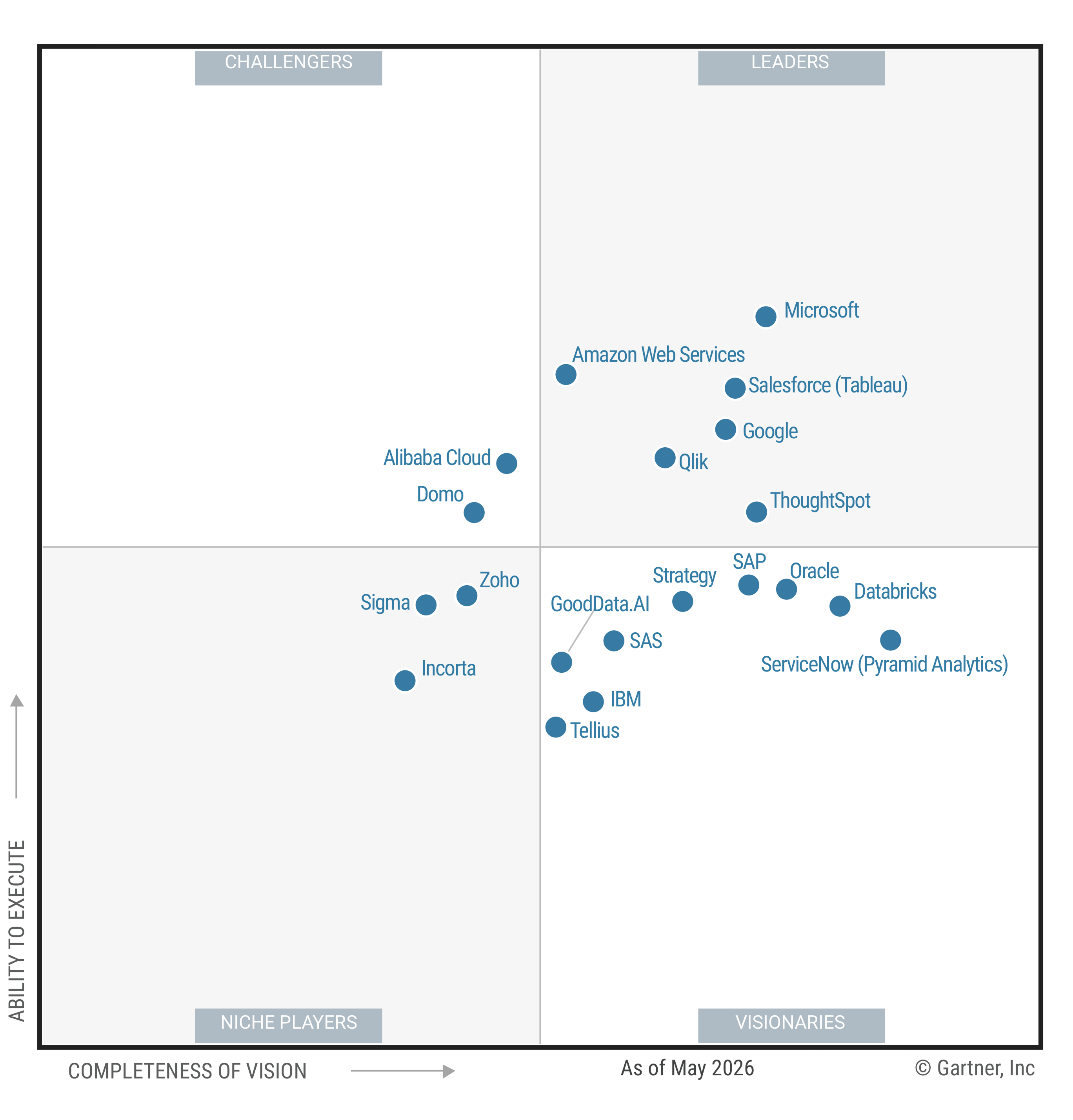
ThoughtSpot describes governed business context as part of its Spotter Semantics product approach.
For your architecture, ask where business meaning lives and who maintains it. You should also document how updates reach agents, analytics tools, and downstream workflows without creating conflicting definitions.
How to Evaluate an AI Orchestration Approach
The best AI orchestration tool is the one that fits your workflow, control model, and operating capacity. A broad feature list tells you less than a bounded test against your own requirements.
Begin with the job: what starts the workflow, what result should it produce, and which decisions remain with people? Then evaluate the orchestration layer across these areas:
Workflow fit: Can it represent your sequence, branches, exceptions, and approval points?
Agent and model support: Can you assign the right participant without tying every step to one model?
Data access: Can you restrict sources by role, purpose, and workflow stage?
Tool contracts: Can you define inputs, outputs, permissions, and failure behavior clearly?
Context quality: Can the workflow carry business definitions, instructions, and relevant history?
Observability: Can owners trace steps, tool calls, errors, approvals, and changes?
Human oversight: Can you place review gates before consequential actions?
Evaluation: Can you test accuracy, policy adherence, and exception handling over time?
Portability: Can you change components without rebuilding the entire workflow?
Operating ownership: Are named people responsible for updates, incidents, and policy changes?
A proof of concept should answer more than whether the happy path runs. Test missing data, conflicting instructions, revoked permissions, unavailable tools, and outputs that require escalation.
Use explicit success criteria before the test begins. Include expected exceptions, rollback steps, review time, and the owner responsible for each failure mode.
Once the bounded workflow behaves as intended, you can decide whether broader use is warranted. That sequence keeps platform selection tied to evidence from your environment rather than a vendor ranking.
Plan for Interoperability Without Assuming It Is Settled
Orchestrated workflows often span agents, models, data services, and enterprise tools. Interfaces and protocols matter because every connection introduces assumptions about identity, context, inputs, outputs, and errors.
In 2026, the NIST agent standards initiative named industry-led standards, community-led protocols, and research as three strategic pillars. That initiative shows interoperability remains an active area of work.
It does not mean agent standards are settled, universal, or ready to make every component interchangeable. Your architecture still needs documented connector capabilities and clear fallback behavior.
As a practical implementation checklist, document the authentication method, permitted data, supported actions, expected response format, and failure path for each connection.
As a ThoughtSpot implementation example, ThoughtSpot's MCP connection requirements document bearer-token authorization and security-rule enforcement in data-source responses. The same documentation covers optional full-response metadata and expired-token troubleshooting for a specific custom-chatbot integration. This is not a universal orchestration standard.
Use this documentation to support change review when models, tools, or requirements change.
Put Context and Control at the Center
AI orchestration becomes useful when it coordinates a clearly defined job while preserving business meaning, permission boundaries, visibility, and human authority. If any of those elements remains vague, pause before adding more agents or actions.
With those questions defined, you can compare each approach against the job, context, controls, and owners you have documented.
For a product-specific example, you can explore AgentSpot workflows, which ThoughtSpot positions around shared context, integrations, and governance for agentic workflows.