Repetitive, multi-step processes eat up your team's time, but traditional automation has trouble adapting when conditions change. Agentic workflows are different: AI agents that plan their own approach, execute tasks, and adjust on the fly. That’s a must-have competitive advantage, but the challenge comes in building them without creating major new risks.
This guide has the big ideas you need to understand how to implement agentic commerce workflows. You'll see the core components that make agentic workflows function, proven patterns from production systems, and the guardrails that keep agents operating safely. Read on for a practical blueprint to help you understand the basics of implementing agentic analytics and commerce workflows.
What are agentic workflows?
Agentic workflows are automated processes where AI agents plan, execute, and adjust multi-step tasks on their own to reach a defined goal. Instead of following a fixed sequence of steps, these workflows change course when conditions change.
Here's what that means in practice:
You set an objective: Define what you want the agent to accomplish
Grant tool access: Give the agent access to the systems and data it needs
The agent executes: It works through the steps autonomously, rerouting around problems as they arise
Task completion: The agent handles everything from start to finish, without constant oversight or coding for every edge case
How they're different from chatbots and basic automation
Traditional chatbots respond to single questions with single answers, while basic automation follows fixed rules: "If inventory drops below 50 units, send an alert." These systems execute predefined sequences without adapting to changing conditions.
Agentic workflows handle complete task sequences autonomously. Instead of just alerting you to low inventory, they check stock across warehouses, analyze demand patterns, research suppliers, and draft purchase orders without manual coding. They adapt decisions based on current conditions and contextual understanding over static rules.
Where you'll find them in your current tech stack
You're probably already seeing and/or using platforms that enable these workflows in action:
Microsoft Copilot Studio: Provides tools to build custom agents that handle multi-turn conversations and execute actions across your Microsoft environment
Google Vertex AI Agent Builder: Offers frameworks to create conversational AI agents for customer service that can access multiple data sources and complete tasks
Anthropic's Claude: Demonstrates advanced tool use and computer interaction capabilities, allowing AI to navigate software interfaces like a human would
These platforms are well-represented in the current state of agentic technology, but the field is evolving rapidly. The next wave will focus on agents that explain their reasoning in plain language: full-fledged AI analysts that bridge the gap between automation and trust.
Ready to see agentic workflows in action? Discover how data-driven automation can work for your business. Start your free trial today.
The Agentic Workflow Canvas
Before you build your first agentic workflow, map it out on a single page. Think of this canvas as seven connected boxes that force you to answer the critical questions: What should the agent do? What can it access? How will it decide? What are the limits? The canvas keeps your design concrete and your team aligned.
1) Intent & success criteria
Start by defining what you want the workflow to accomplish and how you'll measure whether it's working:
Intent: What you want the agent to do—for example, "resolve customer billing inquiries."
Success criteria: Measurable outcomes that define success. For customer inquiries, this might be response time under two minutes, accuracy rate above 95%, and cost per resolution under $2.
Key metrics: Your scorecard should track latency, accuracy, cost, and safety to ensure the workflow performs as expected.
Clear intent and measurable criteria prevent scope creep and provide your reference point when workflows behave unexpectedly or stakeholders question automation value.
2) Knowledge & tools
List every data source, API, and protocol the agent can access. This might include your customer database, payment processor API, and email system. The protocols that connect these resources matter:
Model Context Protocol (MCP): Standardizes how agents access tools and data sources securely, like a universal adapter for your tech stack.
Agent-to-Agent Protocol (A2A): Enables different agents to communicate and share context when specialized agents need to collaborate on complex workflows.
Agentic Commerce Protocol (ACP) and Agent Payments Protocol (AP2): Handle product discovery, transactions, and cryptographically signed payment mandates for commerce workflows.
These protocols remove the need to build custom integrations for every tool and ensure your agents can work across platforms.
3) Orchestration pattern
Choose how your agent will approach problems. Three patterns have proven effective in production:
Planner-Executor-Reflector: The agent creates a plan, executes it, then evaluates the results to improve future actions. This pattern excels at research, content creation, and iterative problem-solving.
Multi-agent teams: Different specialized agents handle different parts of the workflow. For example, one handles customer communication while another processes refunds and a third updates inventory systems.
Human-in-the-loop circuit breaker: The agent pauses for human approval before taking certain actions, giving you control over high-stakes decisions while automating routine steps.
Your choice depends on task complexity and risk tolerance. Try starting with simpler patterns like Planner-Executor-Reflector for single-agent workflows, then progress to multi-agent teams as your requirements grow more sophisticated.
4) Guardrails
Set clear limits on what the agent can and cannot do. These policies protect your business and build trust:
Spending caps and mandates: Maximum amounts for automated purchases or refunds. In commerce workflows, ACP and AP2 use cryptographically signed mandates that specify exactly what the agent can purchase, from which vendors, and within what spending limits.
Approval requirements: Actions that need human sign-off before proceeding, such as refunds over $500, contract changes, or data deletions.
Allowed actions: A whitelist of specific tasks the agent is permitted to perform, preventing scope creep and unauthorized operations.
Document these guardrails in a central policy registry that your team can reference and update as business requirements evolve.
5) Safety tests
Test your workflow's boundaries before deploying it in production:
Red-team prompts: Create adversarial inputs designed to trick the agent into violating policies or accessing restricted data.
Sandboxed "computer use": When agents interact with user interfaces directly, run them in isolated environments with strict permission scopes to prevent unintended actions on live systems.
Permission scopes: Verify that agents can only access the specific data and tools they need—nothing more.
The threat landscape evolves rapidly. New attack vectors emerge regularly—from prompt injection to data exposure through tool misuse. Treat safety testing as ongoing practice, not a one-time checkpoint, and build continuous testing into your workflow lifecycle.
6) Observability
Track every decision and action your agents take so you can diagnose problems and prove compliance:
Event logs and lineage: Complete records of which data sources were accessed, which tools were called, and what decisions were made at each step.
Replay capability: The ability to reconstruct exactly what happened during any workflow execution for debugging and auditing.
Business SLOs: Service-level objectives tied to outcomes that matter. Examples include time-to-action under five minutes, success rate above 90%, and escalation rate below 5%.
When something goes wrong, or when you need to demonstrate compliance, these logs become your evidence trail, showing not just what happened but why your agent made each decision along the way.
7) Feedback & learning
Build mechanisms to improve your workflows over time:
Human ratings: Let users score their experience with agent interactions so you can identify patterns in successful and failed workflows.
Error buckets: Categorize failures by type, whether that’s API timeouts, insufficient permissions, or ambiguous inputs, so you can address systemic issues.
Continuous tuning: Use feedback to refine prompts, adjust tool selection logic, and update decision thresholds without rebuilding the entire workflow.
These seven components work together to create workflows that are both powerful and predictable. When you define clear objectives, provide the right tools, choose appropriate orchestration patterns, and implement robust guardrails, you build systems that deliver value while maintaining control.
Start Getting Better Insights
How to implement agentic commerce workflows
Digital commerce is one of the most promising areas for agentic workflows. These systems can guide customers through complex buying journeys, handle negotiations, and complete transactions with minimal human oversight. Check out a few ways you can do it:
Building conversational shopping experiences
Agentic commerce workflows guide customers from product discovery to purchase completion within a single conversation. Here's how they work:
Natural language interaction: Customers describe their needs in plain language rather than navigating category hierarchies or applying filters.
Intelligent product matching: The agent searches your catalog, identifies relevant options, and explains key differences between products.
Transaction completion: Once the customer decides, the agent handles checkout, payment processing, and order confirmation.
The Agentic Commerce Protocol (ACP) standardizes these interactions across platforms and vendors. Your agent accesses product catalogs, checks real-time inventory, applies discount rules, and processes payments using consistent methods—regardless of which systems you're integrating.
Handling payments and authorization
The Agent Payments Protocol (AP2) uses cryptographically signed "mandates" to control what agents can purchase on your behalf. Each mandate defines specific permissions:
Approved vendors: Which merchants the agent can transact with
Product categories: What types of items the agent can purchase
Spending limits: Maximum amounts per transaction and cumulative spending caps
Time restrictions: When the mandate is valid and when it expires
This approach replaces broad payment access with granular, revocable permissions. Instead of giving an agent your credit card details, you create specific authorizations for defined scenarios, such as allowing an agent to reorder office supplies up to $500 per month from approved vendors.
Managing risk and building trust
Before agents can act on behalf of customers, your system must verify identity and obtain explicit consent. Implement standard safeguards such as:
Multi-factor authentication: Require two or more verification methods (password plus biometric or one-time code) before granting agent permissions.
Transaction limits: Set maximum values per purchase and daily spending caps. For example, you might limit automated purchases to $200 per transaction with a $1,000 daily maximum.
Audit trails: Log every agent decision, data access, and action with timestamps and reasoning. Store these records for compliance reviews and dispute resolution.
Escalation protocols: Define specific triggers that pause agent actions and request human approval for events such as purchases exceeding $500, vendor changes, or unusual buying patterns.
These controls build customer confidence by making agent behavior predictable and accountable. Customers can review what their agents have done, understand why specific actions were taken, and revoke permissions at any time.
Agentic workflow patterns that work in production
The architecture you choose determines how your agents approach problems, coordinate with other systems, and recover from failures. These four patterns have proven effective across different use cases—from research and content generation to legacy system integration.
| Pattern | How it works | Key benefits | Best use cases |
|---|---|---|---|
| Planner-Executor-Reflector (PER) | The agent breaks down your objective into discrete steps, executes each step while accessing necessary data sources, then evaluates the output against success criteria to identify and correct gaps or errors. | Reduces hallucinations by verifying conclusions against accessed data. Self-corrects inconsistencies before presenting results. | Content creation, market research, financial analysis, or any workflow where accuracy matters more than speed. |
| Multi-agent specialist teams | A team of agents handles specific roles. Planner agents coordinate workflows, retriever agents search data sources, writer agents generate content, and QA agents review for accuracy and compliance. | Agents communicate through the Agent-to-Agent Protocol (A2A), sharing context and handing off tasks without human intervention. Each specialist accesses different systems. | Customer service workflows, content production pipelines, or processes requiring multiple specialized skills and system integrations. |
| Computer-use for legacy UIs | Computer-use agents navigate legacy systems like a human by clicking buttons, filling forms, and reading screens. The agent receives screenshots, identifies relevant elements, and issues commands to interact with them. | Automates systems without APIs. Bridges gaps during digital transformation. | Migrating data from legacy systems, automating workflows in software without APIs, or bridging gaps during digital transformation projects. Note: run in sandboxed environments with strict permission scopes. |
| Low-code automation meets agents | Low-code platforms (Zapier, n8n, Make) handle predictable sequences like event triggers, data movement, and notifications. Agentic steps are added where dynamic decisions are required. | Combines the speed of low-code automation with intelligent decision-making. Allows business users to build without coding. | Rapid prototyping, business-led automation without coding, or extending existing low-code workflows with intelligent decision-making. Note: add additional governance layers for enterprise use. |
Building trust through governance and observability
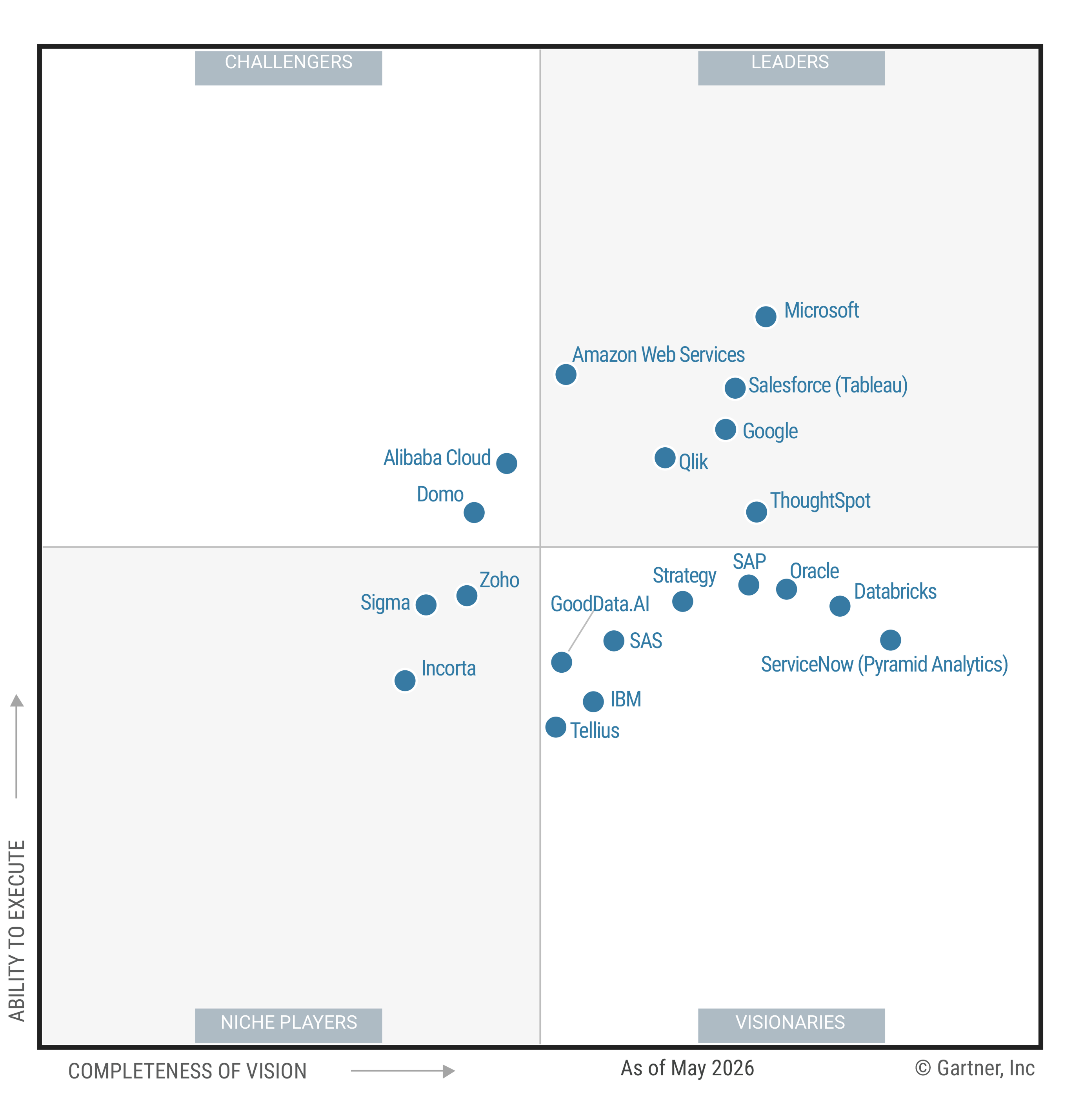
The Gartner market guide for agentic analytics highlights how transparency drives adoption, and how trust is the foundation of any successful agentic workflow. You and your team need confidence that agents will act appropriately, and you need visibility into what they're doing and why.
Policy enforcement
Hard-code your business rules into the agent's operating parameters, including:
Action whitelists: Specific tasks the agent is allowed to perform
Spending controls: Maximum transaction amounts and frequency limits
Approval workflows: Actions that require human sign-off before execution
Data access rules: Which information the agent can read, modify, or share
Monitoring and logging
Track every decision and action your agents take using systems such as:
Decision trails: Why the agent chose a specific approach
Tool usage: Which APIs and data sources were accessed
Performance metrics: Response times, success rates, and error frequencies
User feedback: How customers rate their experience with agent interactions
Error handling and escalation
Define clear protocols for when things go wrong:
Failure scenarios: What happens when an API is unavailable or returns unexpected data
Escalation triggers: Conditions that require immediate human attention
Recovery procedures: How the agent attempts to resolve issues before escalating
Communication protocols: How users are notified when agents encounter problems
Analytics-driven agentic workflows
The most powerful agentic workflows don't just execute tasks—they're triggered and guided by trusted data insights. When AI agents connect to reliable analytics, they transform how your business moves from detecting problems to solving them automatically.
Consider Midas Pharma: they needed fast, actionable insights at scale. After deploying ThoughtSpot agentic analytics, 72% of users were self-serving answers within four months, generating 10,000+ visualizations monthly with sub-second query performance. This foundation of reliable insights enables agents to act with confidence.
Connecting insights to automated actions
Analytics-driven workflows close the loop between detection and response. Your agent spots unusual demand patterns in ThoughtSpot and automatically adjusts pricing or launches promotions, with no manual intervention required. However, traditional BI creates bottlenecks: you spot problems in dashboards, then have to coordinate manually across teams.
ThoughtSpot Embedded builds these closed-loop systems directly into your applications, where insights and actions happen in the same interface. AI agents eliminate delays by connecting insight discovery directly to automated execution, letting agents act on verified data the moment patterns emerge.
Explainable automation
Every automated action should reveal the specific metrics, filters, and reasoning behind it. Spotter is an AI analyst that provides transparency by design, showing the exact data and logic behind every insight so you understand why agents take specific actions.
This explainability matters most in regulated industries where you must document decision bases. Unlike black-box AI that obscures reasoning, ThoughtSpot maintains complete audit trails from data to insight to action, giving you the governance layer that agentic workflows require.
Embedding workflows where work happens
Effective agentic workflows operate within your existing tools. ThoughtSpot embeds intelligent actions directly into business applications, internal portals, Slack, and Microsoft Teams, with minimal new interfaces to learn.
This embedded approach keeps insights and actions connected to business context. Sales teams see pipeline alerts and trigger campaigns without leaving their CRM. Operations spots inventory issues and initiates reorders from their dashboard. ThoughtSpot's AI-native architecture ensures agents access the same governed, trusted data regardless of where they're deployed, maintaining consistency across your entire workflow ecosystem.
Putting agentic workflows to work for you
Agentic workflows represent a fundamental shift in business automation, but success requires careful planning. You need transparency to build trust, governance to maintain control, and reliable data to ground agent decisions.
ThoughtSpot's AI-native platform provides this foundation, connecting intelligent agents to trusted analytics so they don't just respond to problems but actively prevent them. Start your free trial and discover how data-driven insights trigger intelligent actions across your business.
Agentic workflow FAQ
1. What specific roles do I need on my team to manage agentic workflows day-to-day?
Three core roles keep agentic workflows running smoothly:
Product manager: Defines workflow objectives and success criteria
Data engineer: Connects systems and maintains data quality
Operations specialist: Monitors performance and handles escalations when agents encounter unexpected scenarios
Other important roles can include security specialists who audit agent permissions and access patterns, compliance officers who ensure workflows meet regulatory requirements, and business analysts who translate departmental needs into workflow specifications.
2. How should I calculate ROI for implementing agentic AI workflow automation?
Focus on time savings from automated tasks and improved accuracy rates compared to manual processes. Start with a single, measurable workflow like customer inquiry routing or inventory management to establish baseline metrics before expanding to more complex use cases.
3. What's the best way to avoid vendor lock-in when building agentic workflows?
Choose platforms built on open standards with robust API access. Prioritize platforms that allow you to export your workflow logic and integrate with multiple AI providers, giving you flexibility to adapt as technology evolves.
4. When should agentic workflows escalate decisions to humans and how do I set up effective escalation protocols?
Escalate when agents encounter scenarios outside their defined parameters, when confidence scores fall below your threshold, or when actions exceed predetermined risk limits. Your escalation protocol should specify response timeframes and clear ownership for different types of issues.