Why Your AI Agent Is Only As Good As the Tools It Can Reach


by Sam Bowerman, Associate Product Manager at ThoughtSpot
Published: Oct 15, 2026 | 6 min read


Key Takeaways

- Reasoning gets an agent to a decision, but reach is what lets it actually act on your systems.
- Tools need typed contracts, clear inputs and outputs, or agents guess their way into broken workflows.
- Read access and act access carry very different risk, and should be treated as separate permissions.
- Upgrading the model won't fix an agent limited by weak or undocumented tools.
- Giving an agent the ability to act should be a visible, deliberate choice, not a default.
Imagine hiring the sharpest analyst you have ever met. They know the industry cold. They reason like nobody else on the team. They write like a Nobel laureate. Then you realize you never gave them a badge, a laptop, or a login to the CRM.
And a week later, nothing has shipped. Every task still routes back through you, because the analyst can think but can’t touch anything. You’ve just hired a very expensive conversation partner.
That is most people's experience with AI agents today. Intelligence was never the bottleneck; reach was. It’s also the problem AgentSpot was built to solve.
The Model Is Just One Piece of the Puzzle
The model gets most of the attention because reasoning is central to how an agent works. It needs to understand the task, decide what to do next, and adjust when something changes.
But reasoning only takes an agent so far. Its reach matters just as much, from the systems it can access to the actions it can take.
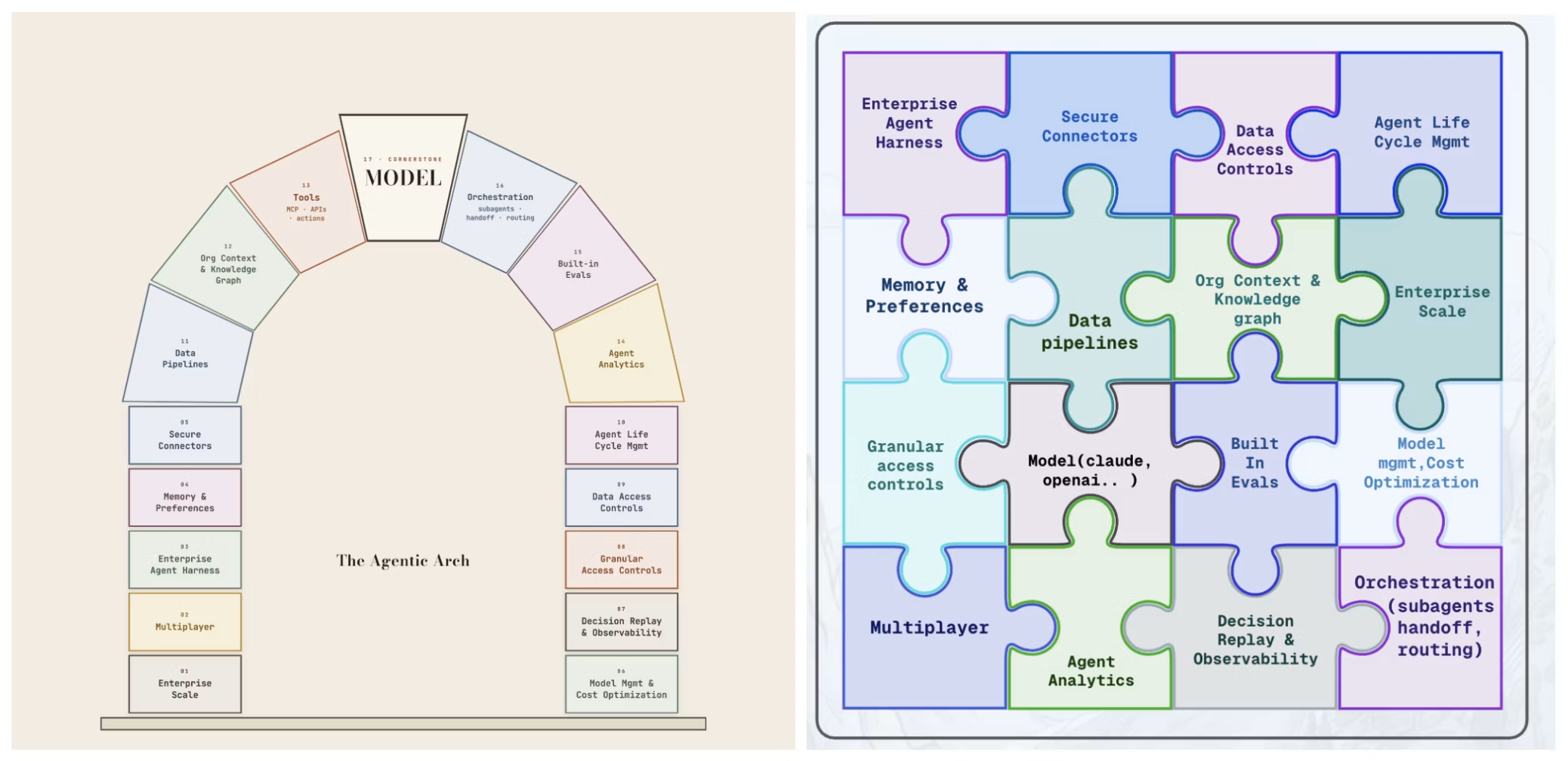
Take two agents with the same model underneath. Give one nothing but its own reasoning. Give the other a defined set of tools: look up an order, check a calendar, draft a follow-up, each with a clear contract for what it needs as input and what it hands back. The second agent can take the next step while the first is left describing what it could do with the right access.
That contract matters more than it sounds. An agent that has to guess what a tool expects, or what shape the answer comes back in, fails quietly and often. A malformed request or a misread response can disrupt the workflow.
This is where AgentSpot draws a hard line. Every tool an AgentSpot agent calls, whether it's a CRM lookup or a Slack message, comes with a typed contract that defines what goes in and what comes back. The agent isn't guessing its way through an API.
It knows exactly what it's working with, so it can chain steps together without gambling on each one. The model is, in a sense, the most replaceable part of the stack. The tools it can reach, and how cleanly it can reach them, are what actually decide what gets done.
How to Draw the Line Between Reading and Acting
Not all reach is equal, and this is the split worth paying attention to. Some tools only let an agent look: check a customer's plan, pull last quarter's numbers, then see who is free Thursday. Others let it act: send the email, update the record, and kick off the refund.
For example:
A "Renewal Watchdog" agent that can only read a customer's usage data is a research assistant with good instincts. It’s useful, but you’re still the one sending the email.
Give that same agent a tool to draft and send the renewal outreach itself, and it becomes a teammate that closes the loop without you standing in the middle of every step.
AgentSpot treats that distinction as a first-class property of every tool, not an afterthought. Read-only tools and side-effecting tools are marked differently under the hood. Admins decide which connectors, and which side of that line, any given agent gets to touch.
Nobody thinks twice about an agent looking something up. Giving an agent the ability to change something is a different decision. AgentSpot keeps that decision visible and deliberate rather than burying it in a prompt.
What Does This Mean for You?
When you’re sizing up an AI agent, the model is the least interesting question. The one that matters is: what can it actually reach, and is that reach read-only or does it act on your behalf?
An agent bolted onto a handful of undocumented API calls will feel clever in a demo and fall apart in production, because every tool call is a guess.
That’s why AgentSpot's connector catalog, including CRMs like Salesforce, HCM, ERP, and workplace tools it plugs into, is built on typed contracts from the ground up. The read-versus-act line is enforced rather than assumed.
This is also why "just add a smarter model" is rarely the fix when an agent underperforms. A stronger model can raise the ceiling on reasoning, but the agent is still limited by what its tools allow it to do. Better-contracted tools can raise the ceiling on what the agent can actually accomplish.
AgentSpot is built around the belief that the second ceiling is the one holding most teams back, and it's the one worth investing in first.
The Bottom Line: the Model Reasons, and the Tools Reach
And the line between reading and acting is what turns a very articulate assistant into a teammate you can actually delegate to. AgentSpot's tool contracts are what make that delegation safe to hand out at scale.
Hire for reach, not just intelligence. Because the sharpest analyst in the world is still useless without the badge.
See what your agents can do with the right tools. Try AgentSpot.
Frequently Asked Questions
Reasoning is the model's ability to understand a task and decide what to do next. Acting requires tool access, the actual connections to systems like a CRM, email, or database that let the agent carry out the task instead of just describing it.
Most agent failures come from limited or poorly defined tool access, not weak reasoning. If an agent has to guess what a tool expects as input or how to interpret its response, it can send malformed requests or misread results, which breaks the workflow.
A typed contract defines exactly what a tool needs as input and what it returns as output. It removes the guesswork from tool calls, so an agent can chain multiple actions together without gambling on whether each step will work.
Read-only tools let an agent look something up, like checking a customer's plan or pulling last quarter's numbers, without changing anything. Side-effecting tools let it take action, like sending an email or updating a record. AgentSpot marks these differently so admins can control which agents get which level of access.
Not necessarily. A stronger model improves reasoning, but if the agent's tool access is limited or undocumented, it still can't do more. Improving the tools and their contracts often has a bigger impact than switching models.