Your AI agents can connect to ChatGPT, but can they actually access your enterprise data management systems when they need to answer a question like "Which accounts churned last quarter?" Even if you’re riding the wave of agentic technologies in business intelligence and data analytics, your organization might be hitting the same barrier that many others do: Namely, building custom integrations for every single data source, API, and business system their AI needs to touch.
Model context protocol is designed to solve the endless cycle of one-off connections that slow down your AI projects and limit what your agents can actually accomplish. Here's how MCP works as a universal standard for AI connections, plus the practical steps you need to implement it safely in your own data environment without compromising security or governance.
What is the model context protocol (MCP)?
Model Context Protocol (MCP) is an open-source standard that standardizes how AI applications connect to external data sources, tools, and workflows. Think of it as USB-C for AI: one universal adapter that replaces the need for building countless one-off integrations.
Instead of writing custom code or spinning up new ETL pipelines every time you want your AI to access a database, content repository, or business system, MCP creates a single, secure bridge. This standardized connection layer allows your AI agents to interact with any approved data source through one consistent protocol, reducing integration complexity and accelerating time-to-value for your AI initiatives.
How MCP works (the 30-second architecture)
MCP operates on a simple but powerful architectural pattern that defines how different components communicate. This structure standardizes interactions to make agent behavior consistent and secure, whether your AI is running locally or connecting to remote services.
Host → Client → Server
The architecture consists of three main roles:
| Component | What it does | Real-world example |
|---|---|---|
| Host | The AI application where you're actually working. It displays results and accepts your requests. | ChatGPT, Claude Desktop, or a custom analytics dashboard where you ask questions like "Show me Q4 revenue by region." |
| Client | Connects the AI application with external systems by handling requests, formatting messages, and managing communication. | When you request sales data, the client identifies the right database, formats the query, sends it, and returns the results. |
| Server | Sits in front of your data sources and exposes approved databases, APIs, and tools that AI can access safely. | An MCP server connected to Snowflake exposes approved tables, search capabilities, and actions without giving AI unrestricted access. |
So, how do these systems work together?
The host receives your question.
The client routes the request to the appropriate server.
The server safely accesses your data source and returns the answer through the same chain.
This three-part structure keeps your AI connected to real business systems while maintaining security and control at every step.
JSON-RPC + transports
At its core, MCP uses a lightweight messaging format called JSON-RPC to send requests and responses between components. Think of it like a standardized language that lets different parts of your system talk to each other without confusion.
The protocol supports different "transports"—basically, different ways of moving messages between components. If everything's running on the same machine, it uses a simple local connection. If you need to connect across a network, it uses standard web protocols (the same ones your browser uses). This flexibility means MCP works whether you're testing on your laptop or running agentic analytics across your entire cloud infrastructure.
The key advantage: MCP doesn't lock you into one specific infrastructure pattern. The protocol remains consistent regardless of your deployment model—from local database connections on a single server to distributed systems that span multiple cloud environments and remote APIs.
See how ThoughtSpot's agentic analytics platform helps you build intelligent experiences with governed, instant insights. Start your free trial
The 3 primitives you'll see everywhere
MCP is built around three fundamental building blocks—called "primitives" in the lingo of agentic AI—that define how an AI agent can understand context, take action, and follow guided instructions.
Think of primitives as the basic, reusable components that everything else is built on top of. These three primitives work together to create a complete interaction framework.
The 3 core primitives explained
MCP is built on three fundamental building blocks that define how your AI agent understands context, takes action, and follows structured workflows. Here's how each primitive works in practice:
| Primitive | What it does | Real-world example |
|---|---|---|
| Resources (context) | Represents any piece of context the AI might need to answer questions or complete tasks. Each resource is identified by a unique URI, and your host application controls how these resources are presented to users or the AI model for selection. | Your customer database schema, a product catalog file, or your company's sales methodology document. When your AI needs to understand "What fields are in our customer table?" it accesses that schema as a resource. |
| Tools (actions) | Specific actions the AI model can invoke to interact with your systems. For actions that could be risky or alter data, you can require human approval to maintain control and safety. | Running a SQL query against your data warehouse, updating a CRM contact, or generating a visualization from query results. High-risk actions, such as updating customer status, require explicit human confirmation. |
| Prompts (guided workflows) | User-controlled templates for completing specific tasks. They provide predefined arguments and guide users and the AI through a structured workflow. | A "Monthly Revenue Analysis" prompt that automatically pulls the right metrics, applies consistent filters, and formats results the same way every time, ensuring standardized insights across your team. |
How they work together: Resources provide the context your AI needs, Tools define what actions it can take, and Prompts create repeatable workflows that combine both. This three-part framework gives you the flexibility to build powerful AI experiences while maintaining governance and control.
A "read → decide → act" pattern for analytics
When applying model context protocol to data and analytics use cases, a "read, decide, act" pattern provides a safe and effective framework. This approach helps your AI agents operate on trusted information and take actions within governed boundaries.
Read (trusted context)
Before your AI can make intelligent decisions, it needs access to a reliable source of truth. That's where MCP Resources come in: trusted datasets, metric definitions, and schemas that your AI can read and reference.
This approach requires a governed data context layer to ensure the information your AI accesses remains both accurate and secure. An agentic semantic layer serves as this foundation by defining your business logic and maintaining a consistent context for your AI model. Unlike static dashboards that grow stale or outdated data extracts that lose relevance, a live semantic layer delivers governed, real-time data that your AI agents can confidently trust and act on.
Decide (repeatable analysis)
Once your AI has access to trusted data, it needs to analyze that information through a repeatable, structured process. This is where MCP Prompts delivers value: pre-built workflows like "Investigate last week's KPI drop" that enforce specific inputs and consistent output formats. By supplying a clear business context at this stage, you ensure every analysis follows the same logical framework.
The result? Your AI stays focused on the task at hand rather than wandering into tangential analysis. Modern data teams use this approach to scale structured decision-making across their entire organization, turning one-off analyses into repeatable workflows that anyone can execute.
Act (safe automation)
The final step is where your AI takes action based on its analysis. For read-only operations like generating a SQL query or pulling a report, the AI can proceed automatically. But for any operation that writes or changes data—like updating a customer record or modifying a database entry—you build in a human approval gate before executing.
This "read, decide, act" pattern requires an MCP server that sits between your AI agents and your data systems. The server exposes your governed data as Resources, defines which Tools the AI can invoke, and enforces security policies at every step. It translates natural language requests into safe, structured operations while maintaining full audit trails and access controls.
Platforms like ThoughtSpot's Agentic MCP Server implement this architecture by connecting AI agents to a governed semantic layer. This allows agents like ChatGPT or Gemini to interact with your business data using natural language while ensuring every query runs against trusted, real-time information with proper security and reasoning transparency.
Your essential MCP implementation checklist
Getting started with MCP doesn't require a massive, all-hands overhaul. The key is proving value with one focused implementation while building the security and governance foundation you'll need to scale.
1. Secure your connection points first
Treat MCP servers as part of your attack surface from day one. Implement proper LLM security controls, use OAuth or robust access management for remote connections, and follow transport security guidance like origin validation. These foundational controls let you expand confidently later without retrofitting security.
2. Start with one high-impact workflow
Choose a single use case that delivers clear business value. Connect one data source, define one Resource, one Tool, and one Prompt that support that workflow. For example, start with a focused analytics use case like "Analyze customer churn trends" that connects to your data warehouse and provides immediate insights to your sales team.
3. Validate before you scale
Build a "golden prompts" test set to validate functionality and track data quality metrics before expanding to additional systems. Test your MCP server with real user questions, verify that responses are accurate and secure, and document any edge cases or limitations.
💡 Pro tip: Rather than trying to connect everything at once, focus on one high-impact workflow that demonstrates clear ROI. This approach lets you refine your security model and user experience before scaling across your organization.
ThoughtSpot MCP: A new foundation for agentic analytics
ThoughtSpot's Agentic MCP Server connects your AI agents directly to a governed semantic layer, giving them instant access to trusted business data without building custom integrations. Your agents can query live data, generate insights, and take action—all while maintaining the security controls and audit trails you need for enterprise-level analytics.
Ready to see how MCP can transform your AI analytics workflow? Explore ThoughtSpot's Agentic MCP Server and start connecting your AI agents to governed data.
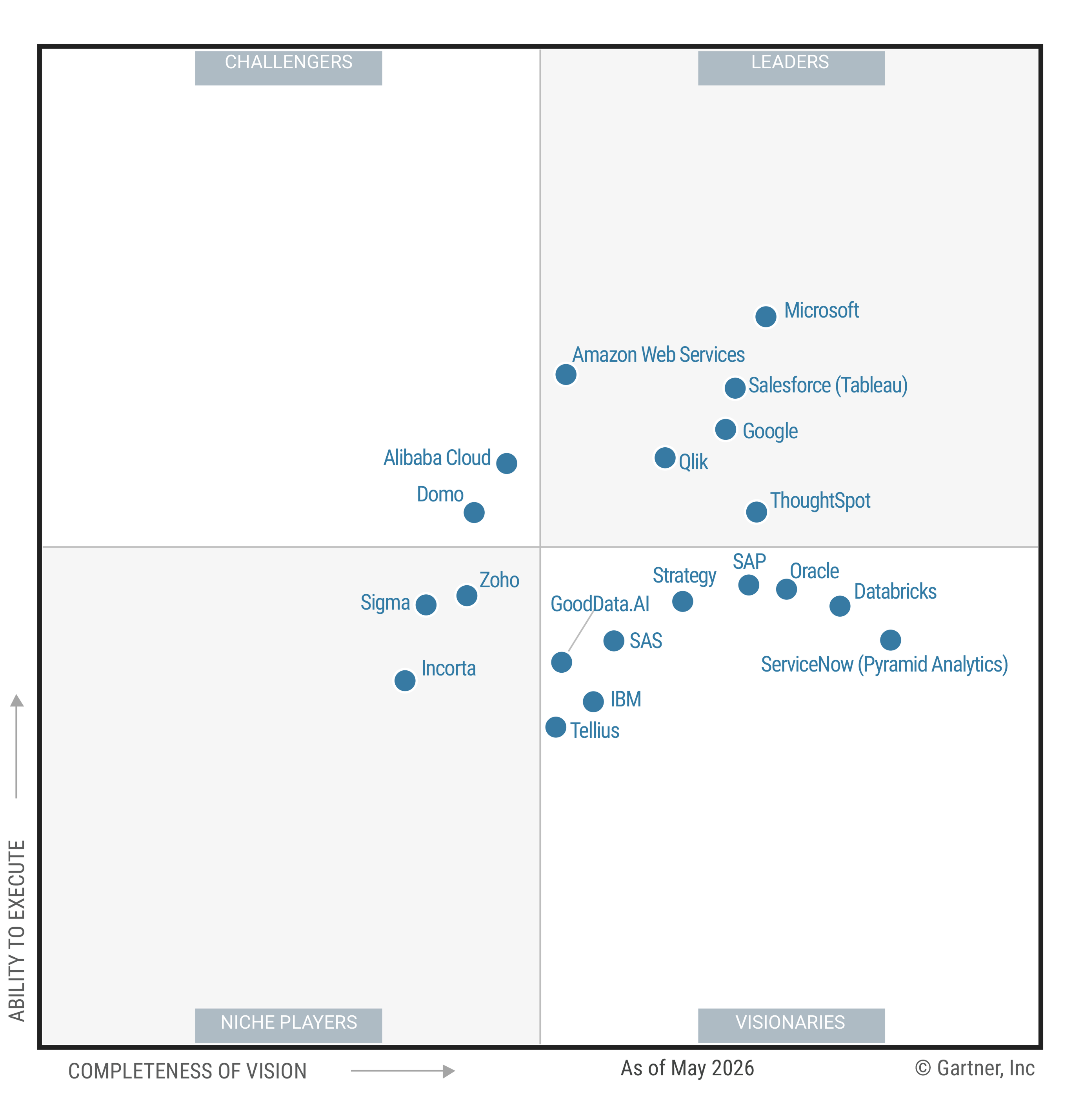
Just getting started with agentic analytics? Check out the 2026 Gartner Market Guide for Agentic Analytics, packed with insights for business leaders who are building the foundations of their future data workflows.